Single lip oil seals are critical components in countless industries, preventing leakage of fluids and protecting sensitive machinery. Their seemingly simple design belies their vital role in ensuring efficient operation and longevity of equipment ranging from automotive engines to industrial pumps. Understanding the nuances of single lip oil seal technology is paramount for engineers, maintenance professionals, and procurement specialists alike, directly impacting performance, cost-effectiveness, and overall system reliability.
Globally, the demand for robust and reliable sealing solutions continues to grow, driven by increasing industrialization and the need for more efficient and environmentally friendly operations. Single lip oil seals, known for their versatility and cost-effectiveness, remain a cornerstone of this industry, with advancements continually refining their materials and designs. From the automotive sector experiencing shifts toward electric vehicles to the demanding requirements of aerospace applications, the need for innovative and high-performance seals is unwavering.
The functionality of a single lip oil seal extends far beyond simple containment. It’s a crucial element in preventing contamination, reducing friction, and extending the lifespan of critical components. Without effective sealing, machinery faces premature failure, downtime, and costly repairs. This makes the selection and proper implementation of a single lip oil seal a strategic decision impacting a company’s bottom line and operational efficiency.

The Foundation of Single Lip Oil Seals
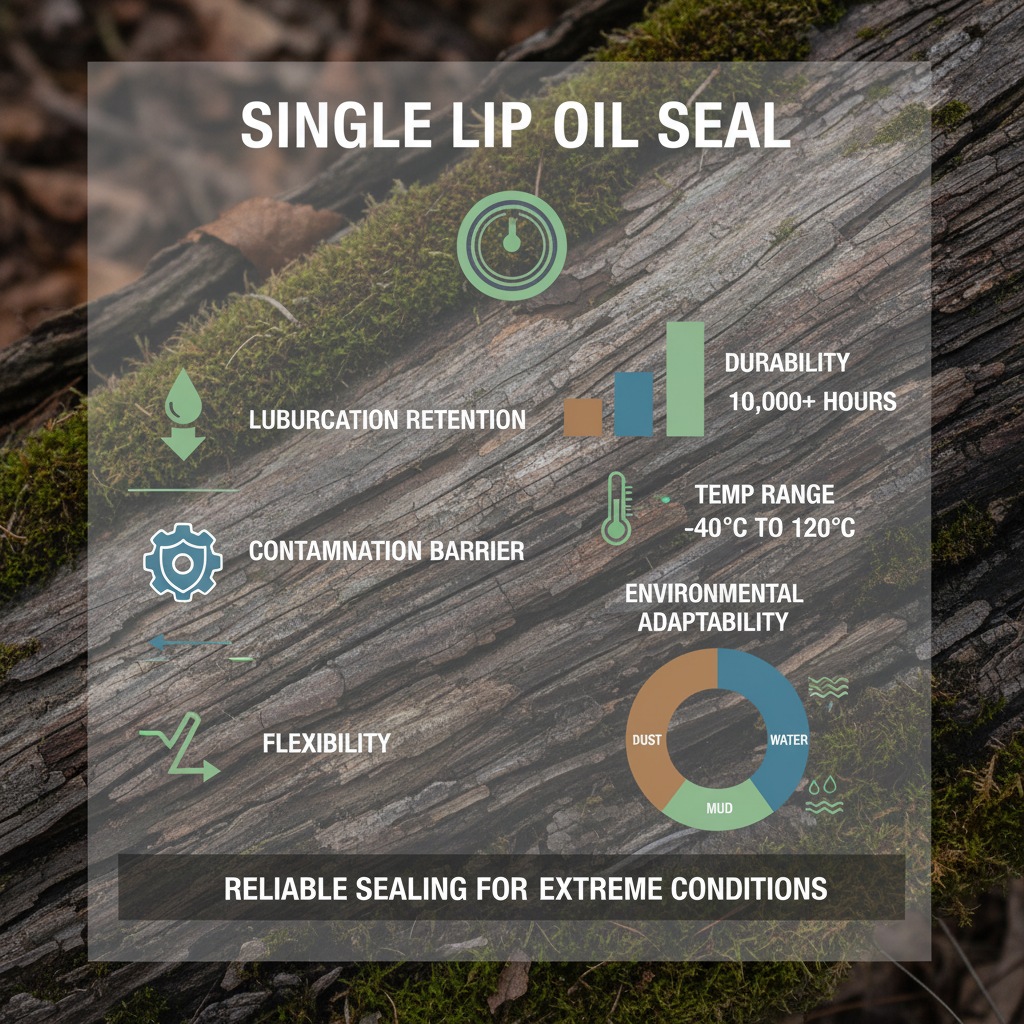
The history of single lip oil seals is intertwined with the evolution of mechanical engineering itself. As machinery became more complex, the need to prevent lubricant leakage and contamination became increasingly critical. Early sealing solutions were rudimentary, often relying on packing materials and basic gaskets. The development of the single lip oil seal, however, represented a significant leap forward, offering a more dynamic and effective sealing method.
Today, the modern single lip oil seal is a sophisticated product, utilizing advanced materials and precision manufacturing techniques. They are found in countless applications, from the automotive industry to aerospace, construction, and beyond. Their core function remains the same – providing a reliable barrier against fluid loss and contamination – but the methods for achieving that function have evolved considerably.
FAQS
The lifespan of a single lip oil seal varies significantly based on operating conditions, the fluid being sealed, and the quality of the seal itself. Generally, a properly installed and maintained seal can last anywhere from 1,000 to 5,000 hours of operation, or even longer in less demanding applications. Regular inspections and proactive replacement are crucial to prevent unexpected failures. Considering factors like temperature extremes, abrasive contaminants, and chemical compatibility will dictate the precise lifespan.
Selecting the appropriate material is paramount for optimal performance. Nitrile rubber is a common choice for petroleum-based fluids, while Viton offers superior resistance to high temperatures and aggressive chemicals. Silicone is suitable for wide temperature ranges, and polyurethane provides excellent wear resistance. Consulting with a seal manufacturer or engineer is highly recommended to determine the best material for your specific application and fluid compatibility requirements.
Common failure modes include abrasion from contaminants, chemical attack from incompatible fluids, overheating, improper installation, and shaft surface damage. Regular maintenance, filtration of fluids, and ensuring proper shaft preparation can significantly reduce the risk of failure. Incorrect seal sizing or excessive pressure can also contribute to premature wear and leakage.
While possible, using a standard single lip oil seal in a vacuum environment presents challenges. The lack of external pressure can make it difficult for the lip to maintain contact with the shaft, leading to leakage. Specialized seals designed for vacuum applications, often incorporating additional sealing features, are typically recommended. Material selection is also critical, as some materials can outgas in a vacuum.
Shaft finish is extremely important. A rough or damaged shaft surface will quickly wear down the seal lip, leading to leakage and failure. The shaft surface should be smooth and free from imperfections, with a Ra value (average roughness) typically specified by the seal manufacturer. Proper surface preparation, including polishing or honing, is essential for maximizing seal life and performance.
A single lip oil seal has one sealing lip, providing a basic level of protection against leakage and contamination. A double lip oil seal features two sealing lips, offering a more robust barrier and enhanced protection, particularly in harsh environments or high-pressure applications. Double lip seals are often preferred for demanding applications where reliability and longevity are critical. The choice depends on the specific application requirements and operating conditions.
Conclusion
In conclusion, the single lip oil seal remains a fundamental component in a vast range of mechanical systems. Its effectiveness hinges on a complex interplay of material science, precise manufacturing, and correct application. Understanding the key performance factors, common failure modes, and emerging technologies associated with these seals is vital for engineers, technicians, and procurement professionals seeking to optimize equipment reliability and minimize operational costs. Properly selecting and implementing a single lip oil seal is not merely a maintenance task but a strategic investment in long-term performance.
Looking ahead, continued innovation in materials and seal designs, coupled with the integration of smart technologies, will further enhance the capabilities and value of single lip oil seals. Proactive maintenance, coupled with a deeper understanding of these crucial components, will continue to be essential for ensuring the smooth and efficient operation of machinery across diverse industries. We encourage you to explore our range of high-quality single lip oil seals and contact our expert team for personalized assistance with your specific application needs.
Related Posts


 English
  Afrikaans
  Albanian
  Amharic
  Arabic
  Armenian
  Azerbaijani
  Basque
  Belarusian
  Bengali
  Bosnian
  Bulgarian
  Catalan
  Cebuano
  Corsican
  Croatian
  Czech
Czech  Danish
  Dutch
Dutch  Esperanto
  Estonian
  Finnish
  French
  Frisian
  Galician
  Georgian
  German
  Greek
Greek  Gujarati
  Haitian Creole
  Hausa
Hausa  Hawaiian
  Hebrew
  Hindi
Hindi  Miao
Miao  Hungarian
  Icelandic
  Igbo
Igbo  Indonesian
  Irish
Irish  Italian
  Japanese
  Javanese
  Kannada
  Kazakh
  Khmer
Khmer  Rwandese
  Korean
  Kurdish
  Kyrgyz
  Lao
Lao  Latin
Latin  Latvian
  Lithuanian
  Luxembourgish
  Macedonian
  Malgashi
  Malay
Malay  Malayalam
  Maltese
  Maori
Maori  Marathi
  Mongolian
  Myanmar
  Nepali
  Norwegian
  Norwegian
  Occitan
  Pashto
  Persian
  Polish
  Portuguese
  Punjabi
  Romanian
  Russian
  Samoan
  Scottish Gaelic
  Serbian
  Sesotho
  Shona
Shona  Sindhi
  Sinhala
  Slovak
  Slovenian
  Somali
  Spanish
  Sundanese
  Swahili
  Swedish
  Tagalog
  Tajik
Tajik  Tamil
Tamil  Tatar
Tatar  Telugu
  Thai
Thai  Turkish
  Turkmen
  Ukrainian
  Urdu
Urdu  Uighur
  Uzbek
Uzbek  Vietnamese
  Welsh
Welsh  Bantu
Bantu  Yiddish
  Yoruba
  Zulu
Zulu