In the high-precision world of mechanical engineering, the gearbox oil seal serves as the primary line of defense against lubrication loss and external contamination. By maintaining a tight seal between the rotating shaft and the stationary housing, these components ensure that gear assemblies operate with minimal friction and maximum efficiency. Without a high-quality sealing solution, the risk of catastrophic gearbox failure increases exponentially, leading to costly downtime and expensive repairs.
Globally, the demand for high-performance sealing technology has surged as industrial machinery and automotive powertrains push the boundaries of speed and torque. Whether in heavy-duty mining equipment or passenger vehicles, the integrity of the gearbox oil seal is critical for environmental sustainability, as it prevents hazardous lubricants from leaking into the ecosystem. Understanding the nuances of material science and seal geometry is therefore essential for any maintenance engineer or fleet manager.
By optimizing the selection and installation of these seals, companies can significantly extend the service life of their transmission systems. The transition toward synthetic oils and higher operating temperatures has necessitated a shift toward advanced elastomers like Viton (FKM) and Nitrile (NBR). This guide explores the technical depths and commercial importance of the gearbox oil seal, providing actionable insights for improving mechanical reliability.
Global Industry Context of Gearbox Oil Seals
The global automotive and industrial machinery markets rely heavily on the precision of the gearbox oil seal to maintain operational stability. According to ISO standards for rotating equipment, leakages are one of the top three causes of unplanned maintenance in heavy-duty gearboxes. In an era of lean manufacturing, the ability to prevent lubricant loss not only protects the machinery but also aligns with global environmental mandates to reduce oil spills and waste.
Across North America, Europe, and Asia, the shift toward electric drivetrains and high-torque hybrid systems has redefined the requirements for these seals. Traditional materials are being pushed to their limits by new lubricant chemistries and extreme temperature fluctuations. Consequently, the industry is seeing a move toward specialized polymer blends that can withstand higher shear forces and chemical aggression, ensuring that global logistics and production lines remain uninterrupted.
Defining the Gearbox Oil Seal and Its Purpose
In simple terms, a gearbox oil seal is a mechanical device designed to keep lubricants inside a gearbox while preventing dust, water, and other contaminants from entering. It typically consists of a flexible sealing lip that exerts a controlled amount of pressure against a rotating shaft. This delicate balance allows the shaft to spin freely while maintaining a liquid-tight barrier, which is essential for the longevity of the gears and bearings within.
From a broader industrial perspective, these seals are more than just rubber rings; they are critical components that support global infrastructure. In the humanitarian sector, for instance, the reliability of gearbox seals in water pumps and food distribution vehicles in remote areas can mean the difference between a functioning supply chain and a total system collapse. The seal ensures that the energy transfer remains efficient, reducing the fuel consumption of the vehicle or machine.
Modern industrial needs require these seals to handle a variety of challenges, from extreme vacuum conditions to high-pressure hydraulic environments. By integrating precise geometry and advanced metallurgy (such as stainless steel casing), the gearbox oil seal evolves from a consumable part into a high-performance engineered component that optimizes the overall TCO (Total Cost of Ownership) for the end-user.
Core Components and Material Factors
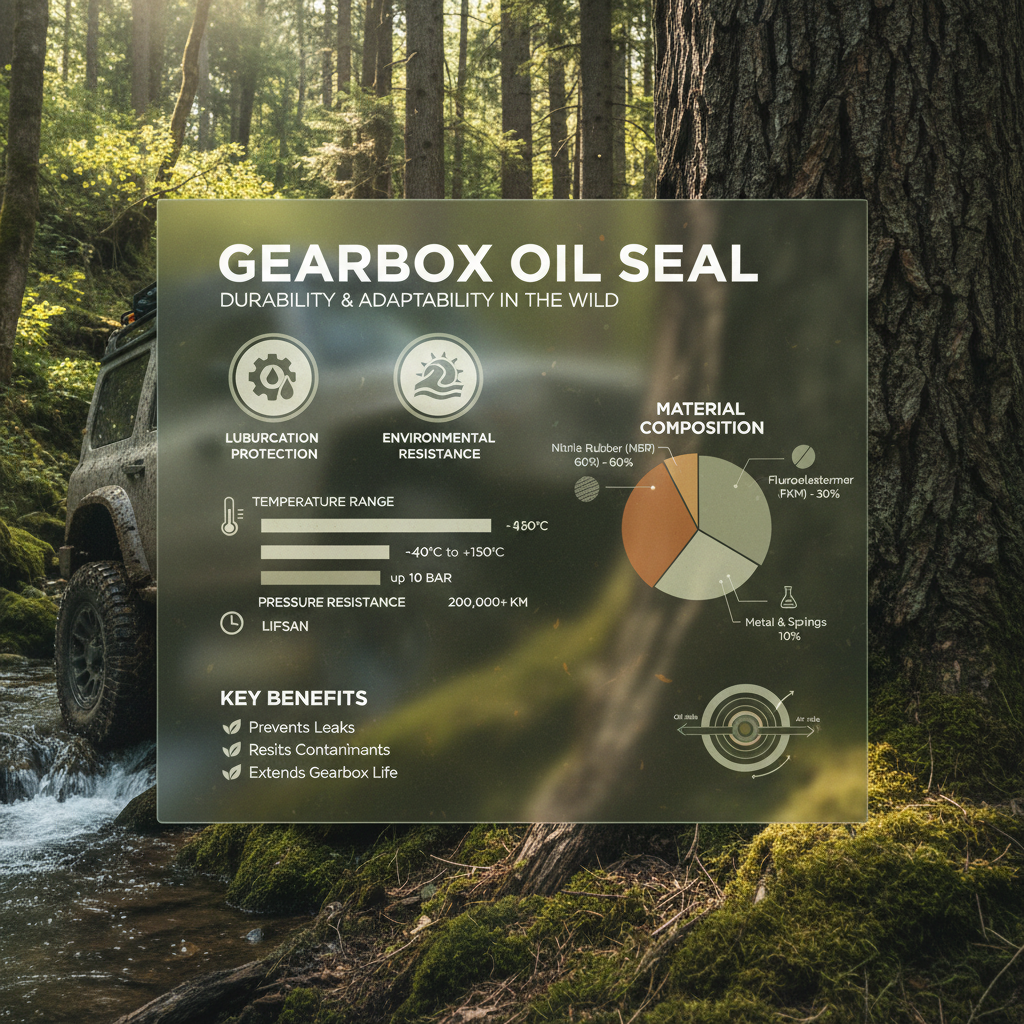
The effectiveness of a gearbox oil seal depends heavily on its material composition. Nitrile (NBR) remains the industry standard for general-purpose applications due to its excellent oil resistance and affordability. However, for high-temperature environments, Fluorocarbon (FKM/Viton) is preferred, offering superior thermal stability and chemical resistance that prevents the seal from hardening and cracking over time.
Beyond the elastomer, the reinforcement components of a gearbox oil seal play a vital role. A metal case provides the necessary structural rigidity to hold the seal in place within the housing, while the garter spring ensures that the sealing lip maintains constant contact with the shaft, even as the elastomer wears down or shrinks due to temperature changes.
Another critical factor is the surface finish of the shaft. A gearbox oil seal requires a specific roughness average (Ra) to function correctly; if the shaft is too rough, it will abrade the lip, and if it is too smooth, the seal cannot retain a microscopic film of oil, leading to premature dry-friction failure.
Performance Metrics and Durability Standards
Evaluating the quality of a gearbox oil seal involves analyzing several key performance indicators (KPIs). These include the leakage rate under pressure, the coefficient of friction, and the wear rate over a set number of revolutions. High-end seals are tested in simulated environments that mimic the most extreme real-world conditions, ensuring they can withstand the axial and radial loads common in heavy-duty transmissions.
Durability is not just about the material, but about how the seal interacts with the lubrication system. A well-designed seal reduces parasitic drag, which directly improves the fuel efficiency of the vehicle. When comparing different sealing methods, engineers often look at the "mean time between failures" (MTBF) to determine which design offers the best balance of cost and reliability.
Performance Rating of Different Gearbox Oil Seal Materials
Global Applications and Industrial Use Cases
The application of the gearbox oil seal spans nearly every sector of the modern economy. In the automotive industry, they are indispensable for manual and automatic transmissions, differentials, and transfer cases. For instance, in the logistics hubs of Europe and North America, heavy-duty trucks rely on these seals to keep axles lubricated over millions of miles of haulage, preventing sudden breakdowns on critical transit corridors.
Beyond transport, the energy sector utilizes these seals in wind turbine gearboxes and hydroelectric generators. In remote industrial zones—such as offshore oil rigs or Arctic mining sites—the gearbox oil seal must operate in extreme temperatures, where standard rubber would freeze or melt. These specialized use cases demonstrate the seal's role in maintaining the stability of global energy production and resource extraction.
Long-Term Value and Economic Advantages
Investing in premium gearbox oil seal components provides significant long-term financial value. While a lower-cost seal may seem attractive initially, the cost of a single oil leak—including the loss of lubricant, the risk of gear scoring, and the labor for replacement—far outweighs the initial price difference. High-quality seals reduce the frequency of maintenance intervals, allowing operators to maximize the uptime of their assets.
From a sustainability angle, the reliability of these seals directly impacts a company's environmental footprint. By eliminating leakage, firms can adhere to stricter ISO 14001 environmental management standards, avoiding heavy fines associated with soil and water contamination. This creates a logical link between component quality and corporate social responsibility.
Moreover, the emotional value of "trust" cannot be overlooked. For a driver of a long-haul truck or a technician managing a power plant, knowing that the gearbox oil seal is of the highest grade provides peace of mind. This reliability fosters trust in the brand and ensures that the safety of the operator is never compromised by a mechanical failure.
Future Trends in Sealing Technology
The future of the gearbox oil seal is being shaped by the digital transformation and the move toward green energy. We are seeing the emergence of "smart seals" equipped with embedded sensors that can detect wear or leakage in real-time. This shift toward predictive maintenance allows companies to replace a seal just before it fails, rather than relying on fixed schedules, thereby reducing waste and costs.
Material innovation is also accelerating, with the development of bio-based elastomers that offer the same performance as petroleum-based rubber but with a significantly lower carbon footprint. These eco-friendly materials are becoming essential as global policies push for a circular economy and carbon neutrality in the manufacturing sector.
Additionally, the rise of automation and 3D printing is enabling the production of custom-geometry seals tailored to specific high-stress points in a gearbox. This precision engineering ensures a more perfect fit and longer life, pushing the boundaries of what the gearbox oil seal can achieve in terms of efficiency and longevity.
Comparative Analysis of Gearbox Oil Seal Specifications
| Material Type |
Temp Range (°C) |
Oil Compatibility |
Life Expectancy |
| Nitrile (NBR) |
-40 to 120 |
Mineral Oils |
Medium |
| Fluorocarbon (FKM) |
-20 to 200 |
Synthetic/Aggressive |
High |
| Silicone (VMQ) |
-60 to 230 |
Low Oil Resistance |
Medium-Low |
| PTFE (Teflon) |
-100 to 260 |
Universal |
Very High |
| HNBR |
-30 to 150 |
High Pressure Oils |
High |
| EPDM |
-50 to 150 |
Brake Fluids/Water |
Medium |
FAQS
The most obvious sign of a failed gearbox oil seal is visible oil leaking from the shaft exit point. You might also notice a drop in oil levels on the dipstick, an increase in gear noise due to insufficient lubrication, or a strange burning smell caused by oil leaking onto hot exhaust components. Regular visual inspections are recommended to catch these leaks early.
NBR (Nitrile) is the economical choice for standard temperatures and mineral oils. FKM (Viton) is a premium material designed for high-heat environments and aggressive synthetic lubricants. If your gearbox operates in heavy-duty industrial cycles or high-temperature automotive settings, FKM is the superior choice as it resists hardening and chemical degradation much more effectively than NBR.
Yes, it can. A leaking gearbox oil seal leads to a gradual loss of lubricant. Once the oil level falls below a critical point, the gears and bearings experience metal-on-metal contact. This creates extreme heat, leading to gear pitting, bearing seizure, and eventual total mechanical failure of the entire transmission system.
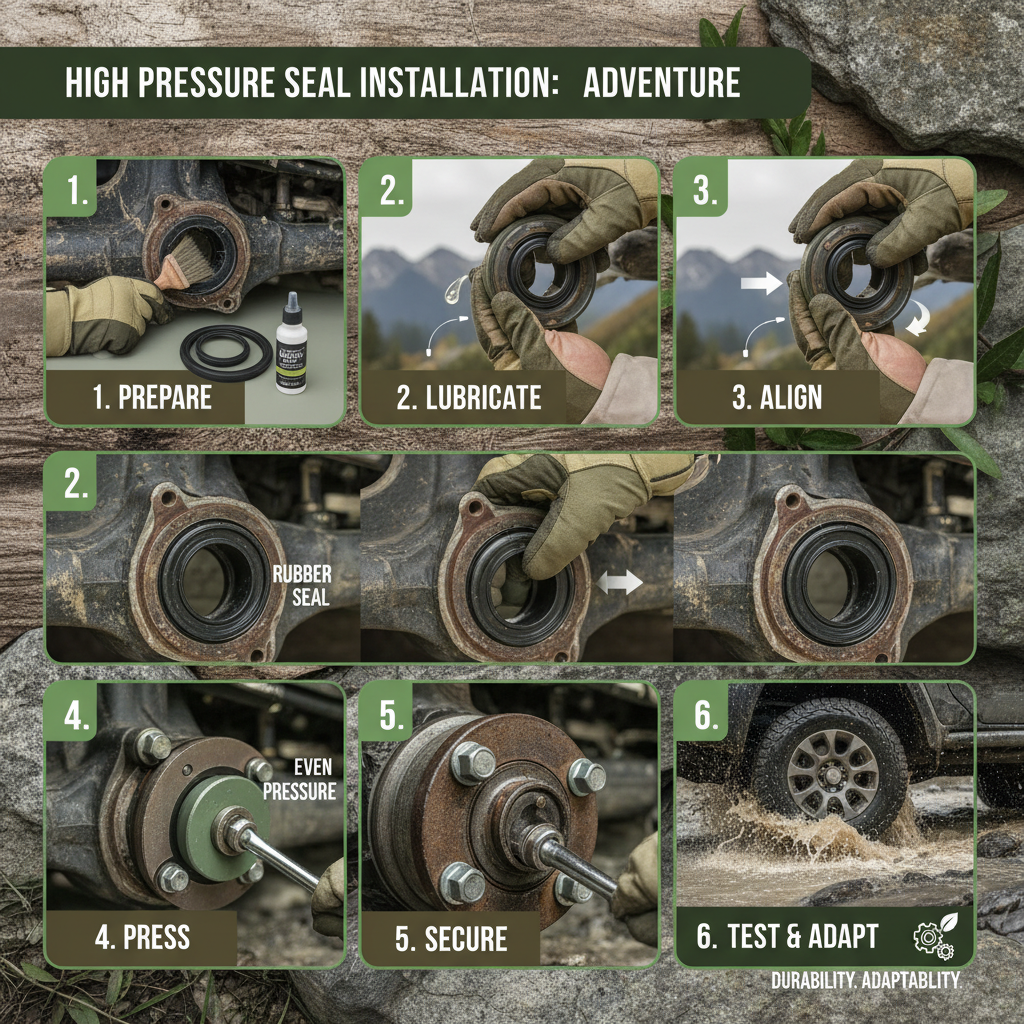
Proper installation is key. First, ensure the shaft is clean and free of burrs. Use a professional seal driver tool to press the gearbox oil seal in squarely; hammering it in manually often tilts the seal, causing immediate leaks. Finally, apply a light coat of clean gearbox oil to the seal lip before installation to prevent dry-start friction.
PTFE seals generally offer lower friction and higher temperature resistance, making them excellent for high-speed applications. However, they lack the "spring-back" elasticity of rubber. Therefore, they are often used as "cassette seals" or combined with spring-loaded mechanisms to ensure they maintain a tight seal against the shaft despite the lack of inherent elasticity.
There is no fixed interval, as it depends on the operating environment. In standard automotive use, seals often last the life of the vehicle. However, in industrial or heavy-duty applications, it is best to inspect the gearbox oil seal every 5,000 to 10,000 operating hours. Replacing them during scheduled overhaul cycles is the best way to prevent unplanned downtime.
Conclusion
In summary, the gearbox oil seal is a small but pivotal component that ensures the mechanical integrity, efficiency, and environmental compliance of transmission systems worldwide. From the selection of high-grade elastomers like FKM and NBR to the precision of the installation process, every detail contributes to the longevity of the machinery. By focusing on material compatibility and predictive maintenance, industries can significantly reduce operational costs and avoid the risks associated with lubricant failure.
Looking forward, the integration of smart sensors and sustainable bio-polymers will further elevate the role of sealing technology in the era of Industry 4.0. We encourage engineers and procurement managers to prioritize quality over initial cost to secure long-term reliability and safety. For high-performance sealing solutions tailored to your specific industrial needs, visit our website: www.yjmseal.com.



 English
  Afrikaans
  Albanian
  Amharic
  Arabic
  Armenian
  Azerbaijani
  Basque
  Belarusian
  Bengali
  Bosnian
  Bulgarian
  Catalan
  Cebuano
  Corsican
  Croatian
  Czech
Czech  Danish
  Dutch
Dutch  Esperanto
  Estonian
  Finnish
  French
  Frisian
  Galician
  Georgian
  German
  Greek
Greek  Gujarati
  Haitian Creole
  Hausa
Hausa  Hawaiian
  Hebrew
  Hindi
Hindi  Miao
Miao  Hungarian
  Icelandic
  Igbo
Igbo  Indonesian
  Irish
Irish  Italian
  Japanese
  Javanese
  Kannada
  Kazakh
  Khmer
Khmer  Rwandese
  Korean
  Kurdish
  Kyrgyz
  Lao
Lao  Latin
Latin  Latvian
  Lithuanian
  Luxembourgish
  Macedonian
  Malgashi
  Malay
Malay  Malayalam
  Maltese
  Maori
Maori  Marathi
  Mongolian
  Myanmar
  Nepali
  Norwegian
  Norwegian
  Occitan
  Pashto
  Persian
  Polish
  Portuguese
  Punjabi
  Romanian
  Russian
  Samoan
  Scottish Gaelic
  Serbian
  Sesotho
  Shona
Shona  Sindhi
  Sinhala
  Slovak
  Slovenian
  Somali
  Spanish
  Sundanese
  Swahili
  Swedish
  Tagalog
  Tajik
Tajik  Tamil
Tamil  Tatar
Tatar  Telugu
  Thai
Thai  Turkish
  Turkmen
  Ukrainian
  Urdu
Urdu  Uighur
  Uzbek
Uzbek  Vietnamese
  Welsh
Welsh  Bantu
Bantu  Yiddish
  Yoruba
  Zulu
Zulu