National oil seals are critical components in a vast range of machinery, playing a vital role in preventing leakage and contamination. These seals, often overlooked, are fundamental to the efficient and reliable operation of engines, gearboxes, pumps, and countless other mechanical systems. Understanding their design, materials, and applications is crucial for engineers, technicians, and anyone involved in the maintenance and performance of industrial equipment.
The global demand for national oil seals is driven by the continuous growth of industries like automotive, aerospace, and manufacturing. According to a 2023 report by Global Market Insights, the oil seals market is projected to exceed $8 billion by 2032, reflecting the increasing need for high-performance sealing solutions. This growth is further fueled by stricter environmental regulations and a focus on reducing energy consumption, as effective sealing minimizes fluid loss and maximizes efficiency.
Investing in high-quality national oil seals isn’t simply about preventing leaks; it’s about ensuring operational longevity, reducing maintenance costs, and minimizing environmental impact. A failure in a seemingly small seal can lead to catastrophic equipment failure, production downtime, and significant financial losses. Therefore, choosing the right seal for the application is paramount.

The Importance of National Oil Seals
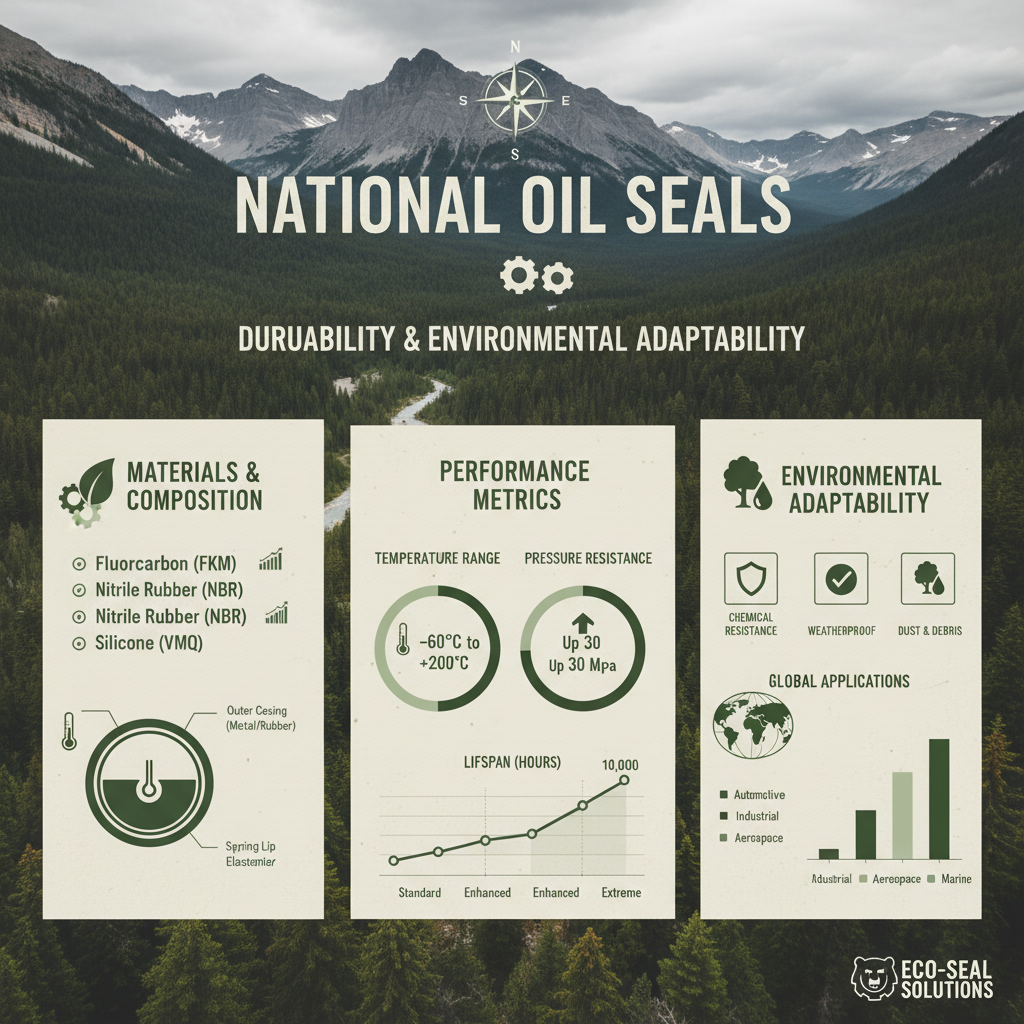
National oil seals aren't merely preventative measures against leakage; they represent a crucial element in maintaining system integrity and overall operational efficiency. Their importance extends across diverse industries, from automotive and aerospace to hydraulic systems and heavy machinery. The consistent performance of national oil seals directly impacts equipment lifespan, reduces downtime, and safeguards against costly repairs.
Properly selected and maintained national oil seals contribute significantly to sustainability by minimizing fluid loss, preventing environmental contamination, and maximizing resource utilization. Furthermore, advances in seal technology are continuously driving improvements in energy efficiency and reducing the overall environmental footprint of industrial processes.
FAQS
When selecting a national oil seal, consider the fluid being sealed, operating temperature, pressure, shaft speed, and the surrounding environment. Material compatibility is crucial; for example, Viton is preferred for high-temperature oil applications, while silicone is better for low-temperature water seals. Proper shaft and housing dimensions are also essential for a secure fit and effective sealing.
Inspection frequency depends on the application and operating conditions. Regularly scheduled inspections should be part of your preventative maintenance program. Signs of wear include visible cracks, hardening, or swelling of the seal material. Replace seals proactively based on manufacturer recommendations or when any signs of deterioration are observed. Ignoring these signs can lead to catastrophic failure.
Lip seals, including national oil seals, rely on the interference fit of a flexible lip against a rotating surface. They are simpler and more cost-effective. Mechanical seals use two flat surfaces held together by spring pressure and provide a more leak-proof seal, ideal for high-pressure and high-speed applications but are more complex and expensive.
While seemingly similar, generic oil seals often lack the precision manufacturing and quality control of national oil seals. This can lead to premature failure, leakage, and potential damage to equipment. It's generally recommended to use national oil seals that meet specific industry standards to ensure optimal performance and reliability.
PTFE seals offer exceptional chemical resistance, wide temperature range, and low friction. They are ideal for aggressive environments where other materials may degrade. While typically more expensive than other seal materials, PTFE seals provide superior long-term performance and reliability in demanding applications.
Spring energization ensures continuous contact between the seal lip and the shaft or housing, compensating for wear, thermal expansion, and pressure fluctuations. This consistent pressure maintains a positive seal, preventing leakage and extending the seal's lifespan. Proper spring selection is crucial for optimal performance.
Conclusion
National oil seals are undeniably essential components for the reliable and efficient operation of a vast range of machinery. Their proper selection, installation, and maintenance are critical for preventing leakage, minimizing downtime, and ensuring long-term performance. Understanding the various materials, designs, and applications of these seals is paramount for engineers, technicians, and operators across diverse industries.
Looking ahead, continued advancements in materials science, manufacturing techniques, and sensor technology promise to further enhance the performance and longevity of national oil seals. By embracing these innovations and prioritizing preventative maintenance, organizations can optimize their operations, reduce costs, and minimize their environmental impact. For the highest quality national oil seals, visit our website: www.yjmseal.com.




 English
  Afrikaans
  Albanian
  Amharic
  Arabic
  Armenian
  Azerbaijani
  Basque
  Belarusian
  Bengali
  Bosnian
  Bulgarian
  Catalan
  Cebuano
  Corsican
  Croatian
  Czech
Czech  Danish
  Dutch
Dutch  Esperanto
  Estonian
  Finnish
  French
  Frisian
  Galician
  Georgian
  German
  Greek
Greek  Gujarati
  Haitian Creole
  Hausa
Hausa  Hawaiian
  Hebrew
  Hindi
Hindi  Miao
Miao  Hungarian
  Icelandic
  Igbo
Igbo  Indonesian
  Irish
Irish  Italian
  Japanese
  Javanese
  Kannada
  Kazakh
  Khmer
Khmer  Rwandese
  Korean
  Kurdish
  Kyrgyz
  Lao
Lao  Latin
Latin  Latvian
  Lithuanian
  Luxembourgish
  Macedonian
  Malgashi
  Malay
Malay  Malayalam
  Maltese
  Maori
Maori  Marathi
  Mongolian
  Myanmar
  Nepali
  Norwegian
  Norwegian
  Occitan
  Pashto
  Persian
  Polish
  Portuguese
  Punjabi
  Romanian
  Russian
  Samoan
  Scottish Gaelic
  Serbian
  Sesotho
  Shona
Shona  Sindhi
  Sinhala
  Slovak
  Slovenian
  Somali
  Spanish
  Sundanese
  Swahili
  Swedish
  Tagalog
  Tajik
Tajik  Tamil
Tamil  Tatar
Tatar  Telugu
  Thai
Thai  Turkish
  Turkmen
  Ukrainian
  Urdu
Urdu  Uighur
  Uzbek
Uzbek  Vietnamese
  Welsh
Welsh  Bantu
Bantu  Yiddish
  Yoruba
  Zulu
Zulu