Lip seals are critical components in countless mechanical systems, ensuring the containment of fluids and preventing the ingress of contaminants. These seemingly simple devices play a vital role in the efficiency, reliability, and longevity of everything from automotive engines and hydraulic pumps to aerospace equipment and household appliances. Understanding the diverse lip seal types available and their specific applications is paramount for engineers, maintenance professionals, and anyone involved in the design or operation of machinery.
The global demand for effective sealing solutions is steadily increasing, driven by factors like stringent environmental regulations, the need for improved energy efficiency, and the ongoing development of advanced technologies. According to industry reports, the global seal market is projected to reach billions of dollars in the coming years, with lip seals representing a significant portion of this market. This growth highlights the importance of ongoing innovation and development in lip seal technology to meet the evolving needs of various industries.
Addressing challenges such as extreme temperatures, corrosive environments, and high-pressure applications necessitates a comprehensive understanding of the different lip seal materials, designs, and manufacturing processes. Choosing the appropriate lip seal is no longer simply a matter of cost; it’s a crucial factor in minimizing downtime, reducing maintenance costs, and ensuring the safe and efficient operation of critical equipment.
The Importance of Lip Seal Types
The proper selection of lip seal types is directly linked to system performance and operational lifespan. A failure in a lip seal can lead to leaks, contamination, reduced efficiency, and even catastrophic equipment failure. Industries ranging from automotive and aerospace to oil and gas rely heavily on the integrity of these seals to maintain their processes and ensure safety.
Furthermore, advancements in materials science and manufacturing techniques continually introduce new and improved lip seal designs, offering enhanced performance characteristics and extended service life. Staying abreast of these developments is crucial for optimizing equipment reliability and minimizing long-term costs.
Defining Lip Seal Types
Lip seals, at their core, are dynamic sealing devices used to prevent the leakage of fluids or gases between rotating or reciprocating components and their housings. They typically consist of a flexible lip made from materials like nitrile rubber, Viton, polyurethane, or PTFE, which is pressed against a rotating shaft or cylinder. The seal’s elasticity and precise geometry create a tight barrier, effectively containing the fluid and excluding contaminants.
The different lip seal types are categorized based on their construction, material, and application. Common types include shaft seals, oil seals, hydraulic seals, and pneumatic seals, each designed to address specific operating conditions and fluid compatibility requirements.
The significance of lip seals extends beyond simply preventing leaks. In modern industrial applications, they contribute to energy conservation, environmental protection, and the overall efficiency of complex systems. Their compact design and relatively low cost make them a preferred sealing solution in a wide variety of applications.
Core Components and Characteristics
Several key factors determine the performance and suitability of different lip seal types. One crucial aspect is the material composition. Nitrile rubber (NBR) is commonly used for oil seals due to its excellent resistance to petroleum-based fluids, while Viton (FKM) provides superior resistance to high temperatures and aggressive chemicals. Polyurethane offers a balance of properties, including abrasion resistance and high pressure capability.
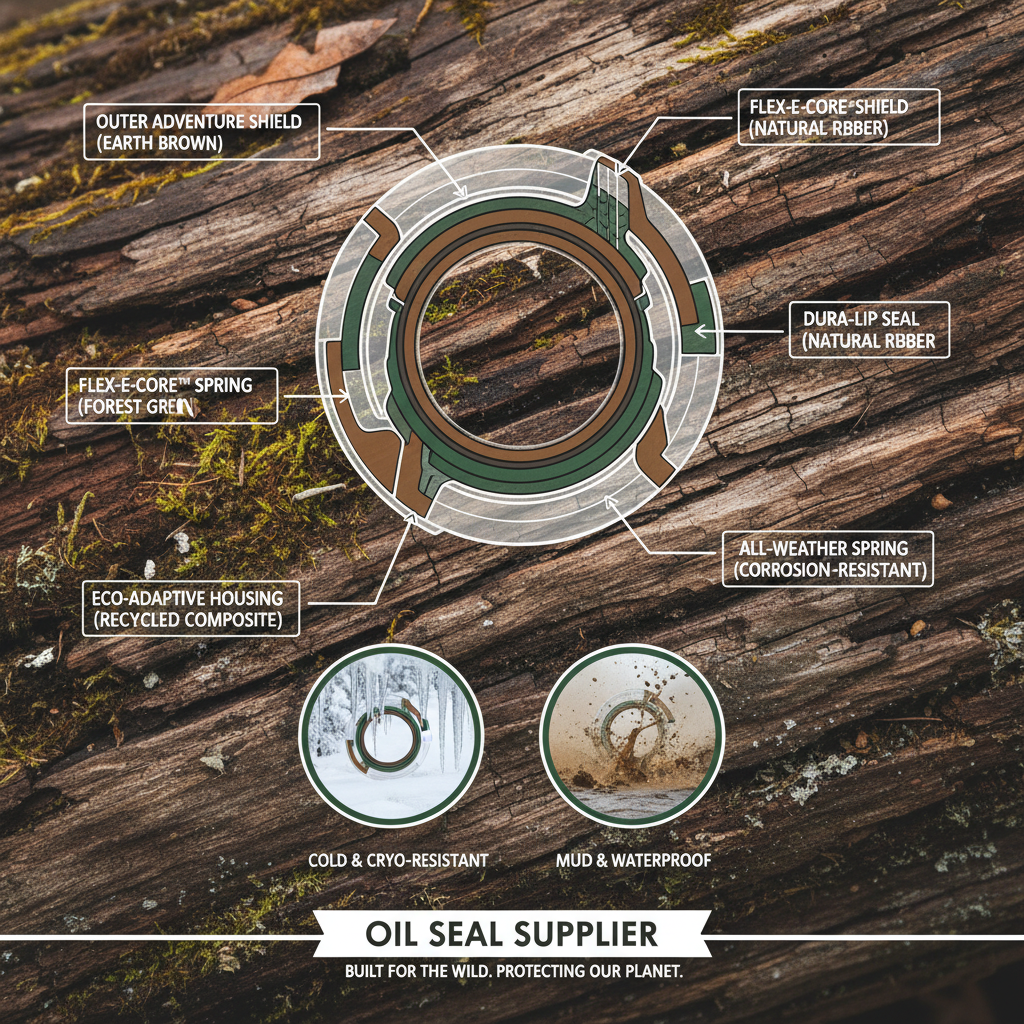
Another important characteristic is the seal’s design. Different lip profiles, spring loadings, and housing configurations are employed to optimize sealing performance under varying conditions. For example, seals with a dust lip provide additional protection against external contaminants, while seals with a spring-energized lip offer enhanced sealing force. The precision of the manufacturing process is also paramount, ensuring dimensional accuracy and consistent performance.
Finally, hardness, measured using the Shore A scale, plays a significant role. Softer materials conform more readily to shaft surfaces, providing a better initial seal, while harder materials offer improved abrasion resistance and longevity. The optimal hardness depends on the specific application and operating conditions.
Practical Applications Across Industries
The versatility of lip seal types is reflected in their widespread use across numerous industries. In the automotive sector, they are essential components in engines, transmissions, and hydraulic systems, preventing oil leaks and ensuring smooth operation. The aerospace industry relies on high-performance lip seals in aircraft engines, landing gear, and control systems.
The oil and gas industry employs specialized lip seals in pumps, compressors, and wellhead equipment, where resistance to harsh chemicals and extreme temperatures is critical. Manufacturing facilities utilize lip seals in a wide range of machinery, including conveyor systems, robotic arms, and hydraulic presses.
Lip Seal Type Performance Comparison
Advantages and Long-Term Value Proposition
Choosing the right lip seal types offers significant long-term benefits. Reduced downtime and maintenance costs are primary advantages, as reliable seals minimize the risk of leaks and equipment failures. Improved energy efficiency is another key benefit, as seals prevent fluid loss and maintain optimal system pressure.
Environmentally, lip seals contribute to pollution prevention by containing harmful fluids and preventing them from entering the environment. From a safety perspective, reliable seals protect personnel from exposure to hazardous materials and prevent accidents caused by fluid leaks. Investing in high-quality lip seals translates to increased operational reliability, reduced lifecycle costs, and a more sustainable operation.
Future Trends in Lip Seal Technology
The future of lip seal technology is focused on developing materials and designs that can withstand increasingly demanding operating conditions. Research into advanced polymers, such as fluorosilicones and perfluoroelastomers, is yielding seals with improved resistance to extreme temperatures, aggressive chemicals, and high pressures.
The integration of smart technologies, such as embedded sensors and predictive maintenance algorithms, is also gaining traction. These sensors can monitor seal performance in real-time, providing early warnings of potential failures and enabling proactive maintenance. Furthermore, the demand for environmentally friendly sealing solutions is driving the development of biodegradable and bio-based seal materials.
Additive manufacturing (3D printing) is emerging as a promising technology for creating customized lip seals with complex geometries and tailored material properties, offering greater design flexibility and faster prototyping.
Common Challenges and Innovative Solutions
Despite advancements in lip seal technology, several challenges remain. One common issue is wear and tear caused by abrasive contaminants or high shaft speeds. Another challenge is maintaining seal integrity in environments with extreme temperatures or corrosive fluids.
Innovative solutions are being developed to address these challenges. Self-lubricating seals, incorporating solid lubricants like graphite or PTFE, reduce friction and wear. Surface treatments, such as plasma nitriding or diamond-like carbon (DLC) coatings, enhance wear resistance and corrosion protection.
Improved seal designs, incorporating features like optimized lip profiles and spring loadings, also contribute to enhanced performance and longevity. Continuous monitoring of seal performance through the use of sensors and data analytics enables early detection of potential issues and proactive maintenance interventions.
A Comparative Overview of Lip Seal Solution Effectiveness
| Seal Type |
Operating Temperature Range (°C) |
Chemical Resistance |
Cost Effectiveness (1-10) |
| Nitrile Rubber (NBR) |
-40 to 120 |
Good (Oil-based fluids) |
8 |
| Viton (FKM) |
-20 to 200 |
Excellent (Wide range of chemicals) |
6 |
| Polyurethane (PU) |
-30 to 150 |
Good (Abrasion resistant) |
7 |
| Silicone Rubber (VMQ) |
-60 to 230 |
Moderate (Limited chemical resistance) |
5 |
| PTFE (Teflon) |
-200 to 260 |
Excellent (Highly chemically inert) |
4 |
| Fluorosilicone (FVMQ) |
-50 to 200 |
Excellent (Fuels, Oils, & Solvents) |
5 |
FAQS
NBR (Nitrile Butadiene Rubber) is a cost-effective option suitable for petroleum-based fluids with moderate temperature ranges (-40°C to 120°C). Viton (FKM) offers superior resistance to high temperatures (-20°C to 200°C) and a wider range of chemicals, including acids, fuels, and oils, but comes at a higher cost. The choice depends on the specific application and fluid compatibility requirements.
Correct sizing is critical for optimal seal performance. You'll need to measure the shaft diameter, housing bore, and axial space available for the seal. Consult the manufacturer's specifications and sizing charts, and consider factors like shaft tolerances and surface finish. Improper sizing can lead to premature failure and leaks.
The spring provides a constant loading force against the shaft, ensuring a tight seal even with shaft variations or dynamic movements. Different spring types (e.g., garter spring, Belville spring) offer varying force characteristics. The spring’s tension must be appropriate for the application to prevent excessive wear or seal failure.
Premature failure can be caused by several factors. Ensure proper lubrication, prevent contamination, avoid excessive shaft speeds or pressures, and select a material compatible with the fluid being sealed. Regularly inspect seals for wear and tear, and replace them proactively based on maintenance schedules.
Yes, specialized lip seals designed for high-speed applications are available. These seals often feature materials with low friction coefficients, optimized lip profiles, and robust spring designs to minimize heat buildup and maintain sealing performance at elevated speeds. PTFE and other advanced polymers are commonly used in these applications.
Consider the environmental impact of the seal material. Some materials, like certain fluoropolymers, have a higher environmental footprint. Explore options like bio-based or biodegradable seal materials when feasible. Proper disposal of used seals is also crucial to minimize environmental contamination.
Conclusion
In conclusion, understanding lip seal types is essential for optimizing the performance, reliability, and longevity of countless mechanical systems. From selecting the appropriate material and design to considering future trends in sealing technology, a proactive approach to lip seal management can yield significant benefits.
As technology advances and industries demand ever-higher levels of efficiency and sustainability, continuous innovation in lip seal technology will be paramount. By embracing new materials, advanced manufacturing techniques, and smart monitoring systems, we can unlock even greater potential for these critical components, driving progress across a wide range of applications. For expert guidance and a comprehensive range of lip seal solutions, visit our website: www.yjmseal.com




 English
  Afrikaans
  Albanian
  Amharic
  Arabic
  Armenian
  Azerbaijani
  Basque
  Belarusian
  Bengali
  Bosnian
  Bulgarian
  Catalan
  Cebuano
  Corsican
  Croatian
  Czech
Czech  Danish
  Dutch
Dutch  Esperanto
  Estonian
  Finnish
  French
  Frisian
  Galician
  Georgian
  German
  Greek
Greek  Gujarati
  Haitian Creole
  Hausa
Hausa  Hawaiian
  Hebrew
  Hindi
Hindi  Miao
Miao  Hungarian
  Icelandic
  Igbo
Igbo  Indonesian
  Irish
Irish  Italian
  Japanese
  Javanese
  Kannada
  Kazakh
  Khmer
Khmer  Rwandese
  Korean
  Kurdish
  Kyrgyz
  Lao
Lao  Latin
Latin  Latvian
  Lithuanian
  Luxembourgish
  Macedonian
  Malgashi
  Malay
Malay  Malayalam
  Maltese
  Maori
Maori  Marathi
  Mongolian
  Myanmar
  Nepali
  Norwegian
  Norwegian
  Occitan
  Pashto
  Persian
  Polish
  Portuguese
  Punjabi
  Romanian
  Russian
  Samoan
  Scottish Gaelic
  Serbian
  Sesotho
  Shona
Shona  Sindhi
  Sinhala
  Slovak
  Slovenian
  Somali
  Spanish
  Sundanese
  Swahili
  Swedish
  Tagalog
  Tajik
Tajik  Tamil
Tamil  Tatar
Tatar  Telugu
  Thai
Thai  Turkish
  Turkmen
  Ukrainian
  Urdu
Urdu  Uighur
  Uzbek
Uzbek  Vietnamese
  Welsh
Welsh  Bantu
Bantu  Yiddish
  Yoruba
  Zulu
Zulu