You know, this oil pan gasket business… it’s been a wild year. Everybody's talking about these new multilayer steel gaskets, claiming they’re the future. To be honest, I’ve seen a lot of “futures” come and go. It’s not about the fancy materials, it’s about getting a good seal, period. I’ve been crawling under trucks and peering into engine bays for twenty years, and a leaky oil pan doesn’t care how it leaks, just that it leaks.
The biggest thing I've noticed lately is everyone wanting thinner and lighter. Makes sense, right? Fuel economy, all that jazz. But there’s a limit. Push it too far, and you’re chasing ghosts. I encountered this at a factory in Ningbo last time, they were trying to shave off another millimeter, and the thing just wouldn't hold compression. Later… forget it, I won’t mention it. It ended with a lot of wasted gaskets and a very red-faced engineer.
The Current Landscape of Oil Pan Gasket Manufacturing
The industry's shifted a lot towards automation, you know? Especially in China. It’s not like the old days when everything was hand-cut. Which is good, in a way. Less variability. But it also means fewer eyes on the product. Strangely, sometimes I miss the smell of rubber and cutting oil. You could tell a good gasket just by how it smelled. The biggest players are still concentrated in Germany and Japan, quality's consistently high, but the price... oof. We're seeing more and more manufacturers pop up in India and Southeast Asia, trying to undercut everyone, but it’s a mixed bag.
Finding reliable oil pan gasket manufacturers is still the biggest challenge, honestly. You get what you pay for, mostly.
Design Pitfalls & Common Mistakes
Oh, the design flaws. Don’t get me started. One of the biggest I see is insufficient surface area for the gasket to actually seat on. Engineers will design these beautiful, streamlined oil pans, but forget the gasket needs a solid, flat surface. And the bolt patterns! If the bolts aren’t evenly distributed, you get uneven compression, and boom, a leak. Another thing – these intricate flange designs, trying to be clever… they just create more places for things to go wrong. Keep it simple, folks.
I always tell the young engineers: remember the guy who's actually going to install this thing, covered in grease, with a torque wrench. Will it be easy? Will it make sense?
And for heaven’s sake, stop specifying materials that are incompatible with the oil! It sounds obvious, but it happens.
Material Matters: Beyond the Spec Sheet
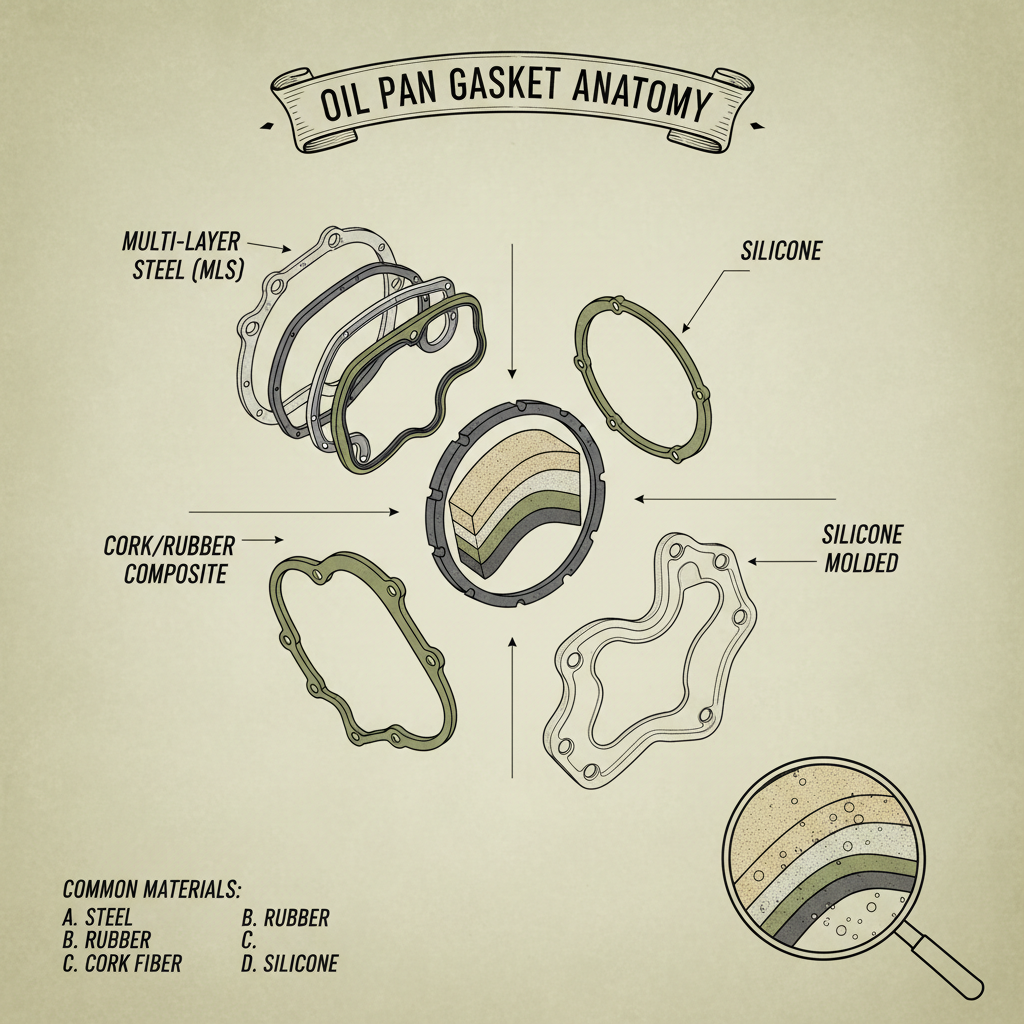
You’ve got your cork, your rubber, your composite materials, your multilayer steel… Each has its place, but it’s not just about the datasheet numbers. I’ve handled cork gaskets that smelled like old libraries, warm and comforting. And rubber ones that smelled like chemicals and made your skin crawl. You get a feel for what's good. The multilayer steel, that's trendy now, feels cold and precise. It's strong, no doubt, but I still prefer a good composite gasket for older engines. The smell when you compress a really good composite… almost like baking bread.
And the coating! Don't underestimate the coating. Some of them are designed to help with initial seating, others to prevent corrosion. I once saw a batch of gaskets where the coating was applied too thick, and it actually prevented a proper seal.
Anyway, I think a lot of engineers forget that these materials aren't just numbers on a page; they're what stand between your engine and a massive oil slick.
Real-World Testing: Beyond the Lab
Lab tests are fine, I guess. Pressure tests, temperature cycling, all that. But they don't tell you how a gasket will perform when it's covered in dirt, grit, and who-knows-what-else. I prefer to see them tested on actual engines, under real-world conditions. We’ve got a test rig at the shop – a beat-up old diesel we run for weeks on end, just to see what breaks. That's when you really learn something.
Oil Pan Gasket Performance Metrics
How They're Actually Used (and Misused)
This is where things get interesting. You’d think people would follow the torque specs, right? Nope. They either under-tighten them, leading to leaks, or they over-tighten them, crushing the gasket. And the sealant! Some folks just slather it on like peanut butter. Too much sealant is just as bad as too little. It squeezes out and contaminates the oil.
The Upsides & Downsides: A Pragmatic View
The multilayer steel gaskets… they're durable, they handle high temperatures, and they conform well to uneven surfaces. That’s the good stuff. But they're expensive. And if you over-torque them, you're sunk. No recovery. The composite gaskets are more forgiving, cheaper, but they don’t last as long. It's a trade-off, always. To be honest, I prefer a good quality rubber gasket for everyday use. It's reliable enough, and when it fails, it's usually a slow leak, giving you time to address it.
The biggest downside of any gasket, though? The guy installing it. A bad install can ruin even the best gasket.
Customization & Special Applications
We get requests for custom gaskets all the time. Usually it's for classic cars, or for racing applications. Last month, that small boss in Shenzhen who makes smart home devices insisted on changing the interface to on their new sensor housing. Said it would be more “future-proof.” The result? We had to design a completely custom gasket to fit the new, oddly-shaped port. It added weeks to their production schedule and cost them a fortune.
But sometimes, customization is essential. For instance, we did a run of gaskets for a marine engine manufacturer that needed a gasket that could withstand constant exposure to saltwater. That required a special material and a specific coating. That's where a good oil pan gasket manufacturers can really shine.
Key Characteristics of High-Performance Oil Pan Gaskets
| Material Composition |
Temperature Resistance (°C) |
Compression Set (%) |
Application Suitability |
| HNBR Rubber Blend |
-40 to 150 |
15 |
General Purpose Engines |
| Multi-Layer Steel (MLS) |
-50 to 250 |
5 |
High-Performance Engines, Turbocharged |
| Viton Fluoroelastomer |
-20 to 200 |
10 |
Engines with Aggressive Oils |
| Cork Rubber Composite |
-30 to 120 |
20 |
Older Engine Designs |
| Silicone Rubber |
-60 to 230 |
18 |
Extreme Temperature Applications |
| Nomex Aramid Fiber |
-100 to 300 |
8 |
High-Stress, High-Temperature Environments |
FAQS
Cleanliness is key. You want a perfectly smooth, grease-free surface. I always recommend scraping off any old gasket material, then using a solvent to degrease the surface. A light sanding with fine-grit sandpaper can help, but be careful not to gouge the metal. And for heaven’s sake, wipe it down with a clean cloth before applying any sealant.
Absolutely not. Just don't. Even if it looks fine, it’s been compressed and it’s lost its sealing properties. Reusing a gasket is just asking for trouble. It’s a cheap part, don’t risk a bigger problem. You’re saving a few bucks now, but you might be looking at major engine damage later. Not worth it.
Not always. Some gaskets are designed to seal without any sealant at all. But in some cases, a thin layer of sealant can help fill any minor imperfections in the surfaces. Just use a high-quality sealant that’s compatible with the oil you’re using. And don’t overdo it. A little goes a long way.
The most obvious sign is oil dripping from the oil pan. But sometimes it’s a slow seep, which can be harder to spot. Check the area around the oil pan for oil residue. Also, look for oil stains on the ground under the engine. A UV dye kit can help pinpoint the source of the leak if you're having trouble finding it.
Always, always refer to the vehicle’s service manual for the correct torque specifications. Torque specs vary depending on the vehicle and the size of the bolts. Using a torque wrench is essential to avoid over-tightening or under-tightening the bolts. Trust me, it’ll save you a headache.
For high-performance applications or engines that are prone to leaks, yes, they're worth it. They offer superior sealing and durability. But for a standard, everyday engine, a good quality composite or rubber gasket will usually do the job just fine. It depends on your budget and your needs.
Conclusion
So, there you have it. Oil pan gaskets… they're not glamorous, but they're essential. It’s a world of materials, designs, and a whole lot of on-the-job experience. From the latest multilayer steels to the tried-and-true composites, the key is understanding the application and choosing the right gasket for the job. It’s about more than just specs on a page; it’s about feel, smell, and knowing what works in the real world.
Ultimately, whether this thing works or not, the worker will know the moment he tightens the screw. And if you’re looking for reliable oil pan gasket manufacturers, well, you know where to look.




 English
  Afrikaans
  Albanian
  Amharic
  Arabic
  Armenian
  Azerbaijani
  Basque
  Belarusian
  Bengali
  Bosnian
  Bulgarian
  Catalan
  Cebuano
  Corsican
  Croatian
  Czech
Czech  Danish
  Dutch
Dutch  Esperanto
  Estonian
  Finnish
  French
  Frisian
  Galician
  Georgian
  German
  Greek
Greek  Gujarati
  Haitian Creole
  Hausa
Hausa  Hawaiian
  Hebrew
  Hindi
Hindi  Miao
Miao  Hungarian
  Icelandic
  Igbo
Igbo  Indonesian
  Irish
Irish  Italian
  Japanese
  Javanese
  Kannada
  Kazakh
  Khmer
Khmer  Rwandese
  Korean
  Kurdish
  Kyrgyz
  Lao
Lao  Latin
Latin  Latvian
  Lithuanian
  Luxembourgish
  Macedonian
  Malgashi
  Malay
Malay  Malayalam
  Maltese
  Maori
Maori  Marathi
  Mongolian
  Myanmar
  Nepali
  Norwegian
  Norwegian
  Occitan
  Pashto
  Persian
  Polish
  Portuguese
  Punjabi
  Romanian
  Russian
  Samoan
  Scottish Gaelic
  Serbian
  Sesotho
  Shona
Shona  Sindhi
  Sinhala
  Slovak
  Slovenian
  Somali
  Spanish
  Sundanese
  Swahili
  Swedish
  Tagalog
  Tajik
Tajik  Tamil
Tamil  Tatar
Tatar  Telugu
  Thai
Thai  Turkish
  Turkmen
  Ukrainian
  Urdu
Urdu  Uighur
  Uzbek
Uzbek  Vietnamese
  Welsh
Welsh  Bantu
Bantu  Yiddish
  Yoruba
  Zulu
Zulu