High temperature oil seals – you don’t think about ‘em until somethin’ breaks down, and then you really think about ‘em. I’ve spent twenty years walkin’ construction sites, power plants, oil rigs – you name it – and I’ve seen firsthand what happens when a seal fails. It ain't pretty. These aren’t just rubber rings, they’re the linchpin in keepin’ critical machinery runnin’ smoothly, especially where things get hot. The reliability of a high temperature oil seal directly impacts uptime, maintenance costs, and frankly, safety.
What’s changed over the years is the demand. Everything’s pushin’ the envelope – engines are more powerful, processes are more intense. We're askin’ more and more of these seals, operatin’ in environments that would’ve melted the old ones. That’s driven a massive shift in materials science and manufacturing. It’s not enough to just seal; it needs to withstand constant heat, aggressive chemicals, and immense pressure. A failure here can cause a cascading effect – lost production, expensive repairs, even environmental hazards.
I’ve seen guys try to cheap out, using a standard seal where a high-temp one’s needed. Big mistake. It’ll save you a few bucks upfront, but you’ll be payin’ for it ten times over down the line. The right seal, properly installed, is an investment, not an expense. It’s about choosing the right materials, the right design, and understandin’ the specific application. And that's where the real knowledge comes in.
The Critical Role of high temperature oil seal
Look, a high temperature oil seal isn't glamorous, but it’s essential. It’s the unsung hero preventing leaks, maintaining pressure, and protecting vital components. We’re talking about everything from turbine engines to hydraulic systems in heavy machinery. Without a reliable seal, you're lookin' at downtime, repairs, and potential safety hazards. It's a foundational element, and folks often underestimate its importance until it fails.
What I’ve learned over the years is that it’s not just about stopping fluid. It's about maintaining system efficiency. A leaking seal means lost energy, reduced performance, and increased operating costs. Every drop counts, especially in large-scale industrial applications. And let’s not forget the environmental impact. Leaks aren't just bad for your bottom line, they’re bad for the planet.
Global Demand and Industry Relevance
The demand for high-performance seals is only growin’, driven by global industrial expansion and increasingly stringent environmental regulations. You see it especially in emerging economies – more power plants, more manufacturing, more demand for reliable infrastructure. According to the World Bank, energy consumption is projected to increase by nearly 50% by 2050, which means a massive increase in the demand for equipment requiring robust seals.
This isn’t just limited to traditional industries. The push for renewable energy – geothermal, concentrated solar power – creates even more demanding environments for seals, with extreme temperatures and corrosive fluids. The ISO standards for industrial seals are constantly evolving to meet these challenges. The need for high temperature oil seal is therefore linked to global infrastructure development, energy demands and industrial progress.
And it’s not just about new builds. Retrofitting older equipment with improved seals is a huge market. Older plants often have seals that are past their prime, causing inefficiencies and posing a risk of failure. Companies are realizing that upgrading these components can significantly improve overall performance and extend the lifespan of their assets.
Defining high temperature oil seal: Beyond a Simple Seal
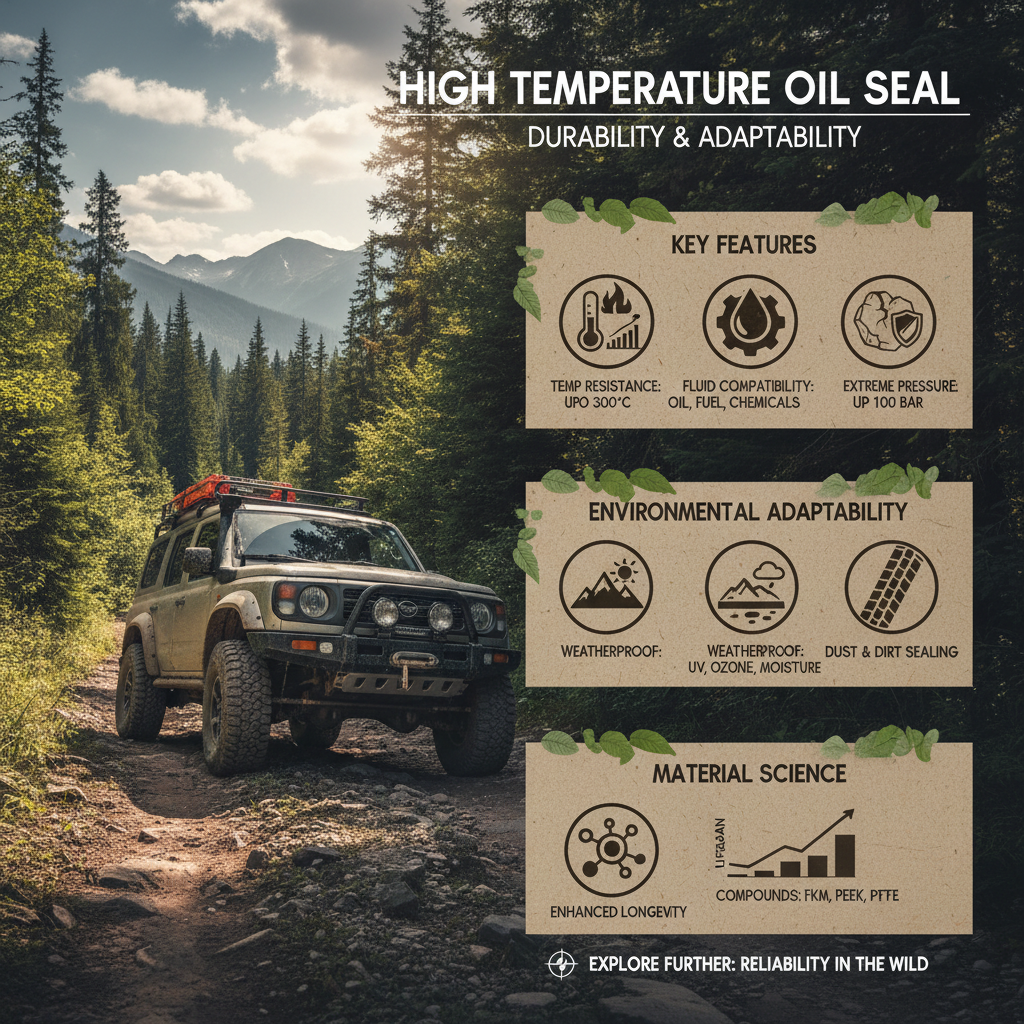
A high temperature oil seal isn’t your average rubber ring. It’s an engineered component designed to maintain a tight seal under extreme heat, pressure, and often, chemically aggressive environments. These seals typically utilize advanced materials like Viton, PTFE, silicone, and specialized elastomers formulated to withstand temperatures far beyond what standard seals can handle.
It’s about the material science. You gotta consider the coefficient of thermal expansion, chemical compatibility, and the seal's ability to maintain its shape and elasticity over time. The design is equally critical – lip profiles, spring energizers, and even jacket materials all play a role in achieving a reliable seal. It’s all interconnected.
Its connection to modern industry is undeniable. From power generation to aerospace, from oil and gas to chemical processing, high temperature oil seals are essential for the reliable operation of critical machinery. They enable processes that would simply be impossible without them, contributing directly to our modern way of life.
Key Factors Influencing high temperature oil seal Performance
There are a few things that make or break a good high temperature oil seal. First, Material Selection – that’s 90% of the battle. Viton is great for a lot of things, but it has its limits. PTFE is excellent for chemical resistance, but it needs support. It's understanding the fluid, the temperature range, and the pressure.
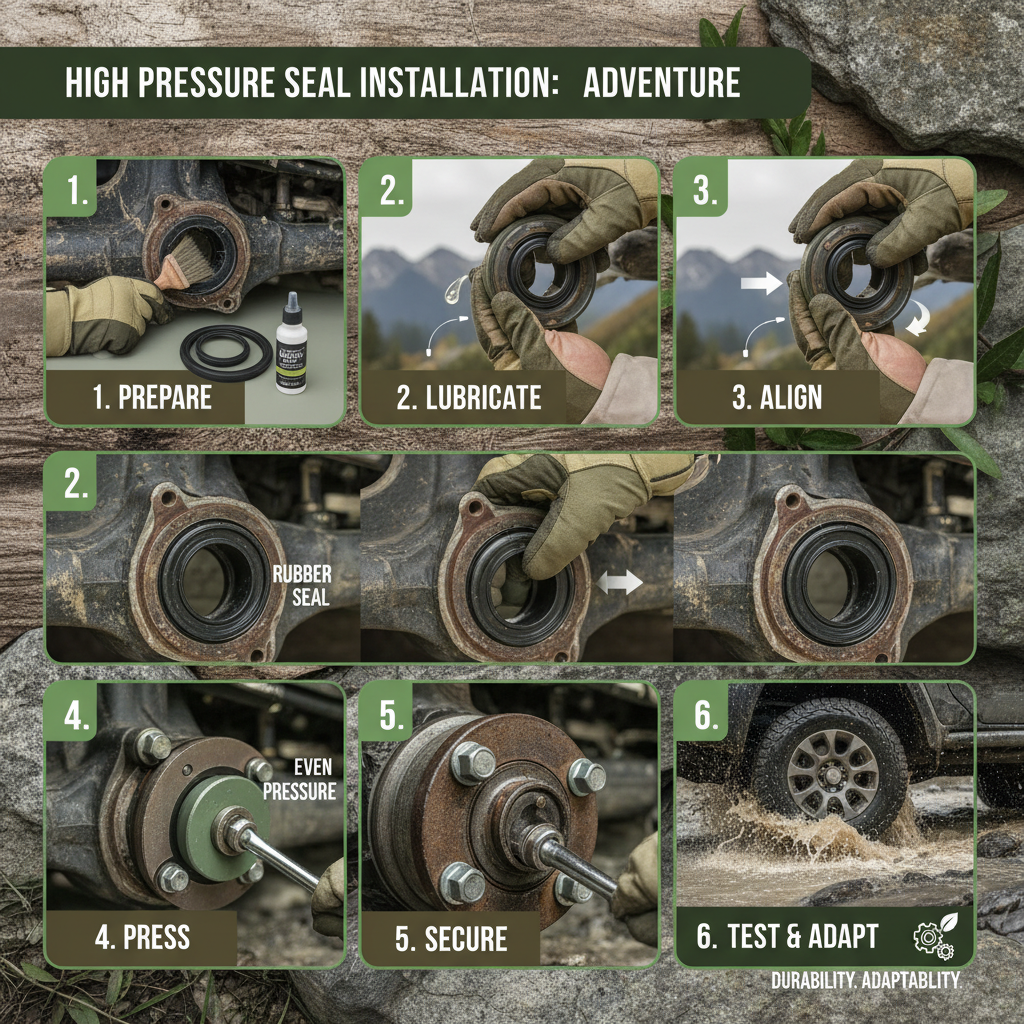
Then you got Seal Design. A simple lip seal might work in some applications, but you often need spring-energized seals or even custom designs to handle extreme conditions. Precision Manufacturing is huge too. Even a tiny imperfection can lead to a leak. And finally, Installation. A perfect seal in the box is useless if it’s installed incorrectly.
High Temperature Oil Seal Performance Metrics
Real-World Applications of high temperature oil seal
You’ll find these seals everywhere. In power plants, they’re crucial for steam turbines and generator seals. Oil and gas refineries rely on them in pumps and compressors handling extreme temperatures and corrosive chemicals. Aerospace applications – jet engines, hydraulic systems – are incredibly demanding.
I’ve worked on projects in remote locations – oil fields in Siberia, geothermal plants in Iceland – where getting a replacement seal quickly can be a logistical nightmare. That’s when you really appreciate a reliable supplier and a seal that’s built to last. And it's not always high tech, a critical seal in an older steam engine can bring a whole plant to a halt if it fails.
The Long-Term Value and Advantages of High-Quality Seals
Investing in a high-quality high temperature oil seal pays off in the long run. Reduced downtime, lower maintenance costs, and improved safety are all tangible benefits. But it's more than that. It's about peace of mind, knowing your equipment is reliable and protected.
A good seal extends the lifespan of critical components, reducing the need for costly replacements. It improves energy efficiency, lowering operating costs and reducing your environmental footprint. And let's be real, a reliable system builds trust with your customers and stakeholders. It's a sign of professionalism and commitment to quality.
Future Trends and Innovations in high temperature oil seal Technology
We’re seeing a lot of innovation in materials science. Researchers are developing new elastomers with even higher temperature resistance and improved chemical compatibility. Smart seals – seals with integrated sensors that can monitor performance and predict failures – are also gaining traction.
Additive manufacturing (3D printing) is opening up new possibilities for custom seal designs. We can now create seals with complex geometries tailored to specific applications. And the focus on sustainability is driving the development of bio-based elastomers and recyclable seal materials.
Digitalization is also playing a role. Predictive maintenance algorithms, powered by sensor data from seals, can help optimize maintenance schedules and prevent unexpected failures. This is where the industry is headed – towards smarter, more efficient, and more sustainable sealing solutions.
Key Considerations for Selecting High-Temperature Oil Seals
| Application Environment |
Temperature Range (°C) |
Fluid Compatibility |
Seal Material Recommendation |
| Steam Turbine |
200-500 |
Steam, Lubricating Oil |
Viton, PTFE |
| Oil Refinery |
150-400 |
Crude Oil, Chemicals |
FFKM (Kalrez), Viton |
| Geothermal Power Plant |
250-350 |
Geothermal Brine |
PTFE, Silicone |
| Jet Engine |
300-600 |
Jet Fuel, Lubricating Oil |
Fluorosilicone, Viton |
| Concentrated Solar Power |
300-550 |
Heat Transfer Fluid |
Viton, Aflas |
| Chemical Processing Plant |
100-300 |
Various Corrosive Chemicals |
PTFE, FFKM |
FAQS
The biggest difference is the material composition. Standard seals often use nitrile rubber, which degrades rapidly at higher temperatures. High-temperature seals utilize materials like Viton, silicone, or PTFE, engineered to withstand extreme heat, maintain elasticity, and resist chemical attack. These materials are more expensive, but crucial for long-term reliability in demanding applications.
First, accurately measure the operating temperature of your system, not just the process fluid, but also the surrounding environment. Then, consult the seal manufacturer's specifications. Always factor in a safety margin - it's better to overestimate than underestimate. Consider both continuous and peak temperatures. Remember, exceeding the rated temperature drastically reduces seal life.
Several factors contribute to failure. Overheating is a primary cause, leading to material degradation. Chemical incompatibility can cause swelling or shrinking of the seal material. Improper installation – like nicking the sealing lip – is another frequent culprit. Finally, excessive pressure or mechanical damage can lead to premature failure. Regular inspection is key.
Not necessarily. Some lubricants break down at high temperatures, forming deposits that can damage the seal. You need a lubricant specifically formulated for high-temperature applications, with appropriate viscosity and additives to ensure compatibility with the seal material and operating conditions. Check the seal manufacturer's recommendations for compatible lubricants.
Lifespan varies significantly depending on the application, operating conditions, and seal quality. Under ideal conditions, a high-temperature seal might last for several years. However, in harsh environments, it could fail in a matter of months. Regular inspection and preventative maintenance are critical to maximizing seal life and minimizing downtime.
Yes, the industry is moving towards more sustainable materials. Bio-based elastomers and seals made from recycled materials are becoming increasingly available. While they may not always match the performance of traditional materials in every application, they offer a lower environmental impact. Companies are also focusing on extending seal life through improved designs and materials, reducing the need for frequent replacements.
Conclusion
High temperature oil seals are more than just components; they’re the backbone of reliability in countless industries. Choosing the right seal, understanding the operating conditions, and prioritizing proper installation are all critical for maximizing performance and minimizing downtime. It's a seemingly small detail with massive implications for efficiency, safety, and sustainability.
Looking ahead, continued innovation in materials science, smart seal technology, and sustainable manufacturing practices will drive further advancements. Investing in these advancements is not just about improving equipment performance; it's about building a more resilient and environmentally responsible future. For reliable, high-performance seals, visit our website: www.yjmseal.com.





 English
  Afrikaans
  Albanian
  Amharic
  Arabic
  Armenian
  Azerbaijani
  Basque
  Belarusian
  Bengali
  Bosnian
  Bulgarian
  Catalan
  Cebuano
  Corsican
  Croatian
  Czech
Czech  Danish
  Dutch
Dutch  Esperanto
  Estonian
  Finnish
  French
  Frisian
  Galician
  Georgian
  German
  Greek
Greek  Gujarati
  Haitian Creole
  Hausa
Hausa  Hawaiian
  Hebrew
  Hindi
Hindi  Miao
Miao  Hungarian
  Icelandic
  Igbo
Igbo  Indonesian
  Irish
Irish  Italian
  Japanese
  Javanese
  Kannada
  Kazakh
  Khmer
Khmer  Rwandese
  Korean
  Kurdish
  Kyrgyz
  Lao
Lao  Latin
Latin  Latvian
  Lithuanian
  Luxembourgish
  Macedonian
  Malgashi
  Malay
Malay  Malayalam
  Maltese
  Maori
Maori  Marathi
  Mongolian
  Myanmar
  Nepali
  Norwegian
  Norwegian
  Occitan
  Pashto
  Persian
  Polish
  Portuguese
  Punjabi
  Romanian
  Russian
  Samoan
  Scottish Gaelic
  Serbian
  Sesotho
  Shona
Shona  Sindhi
  Sinhala
  Slovak
  Slovenian
  Somali
  Spanish
  Sundanese
  Swahili
  Swedish
  Tagalog
  Tajik
Tajik  Tamil
Tamil  Tatar
Tatar  Telugu
  Thai
Thai  Turkish
  Turkmen
  Ukrainian
  Urdu
Urdu  Uighur
  Uzbek
Uzbek  Vietnamese
  Welsh
Welsh  Bantu
Bantu  Yiddish
  Yoruba
  Zulu
Zulu