Look, I’ve spent the last twenty years breathing concrete dust and wrestling with blueprints. I’ve seen seals fail, I’ve seen equipment grind to a halt, and I’ve seen projects delayed because of a simple rubber component. That’s why understanding the importance of a quality fkm oil seal isn't just about specs on a datasheet; it’s about keeping projects running, reducing downtime, and frankly, saving a whole lot of headaches. We’re talking about a small part with a massive impact on overall operational efficiency, especially in demanding environments.
It's not about being cheap, it’s about being smart. Investing in the right fkm oil seal upfront means avoiding costly repairs, unplanned shutdowns, and potential safety hazards down the line. I've seen firsthand the ripple effect of a seal failure – damaged equipment, delayed deliveries, and a frustrated team. And trust me, nobody wants to explain a delay to the client because of a ten-dollar part.
From hydraulic systems in excavators to rotating shafts in pumps, these seals are everywhere. They’re the unsung heroes keeping everything sealed, lubricated, and functioning as it should. And honestly, the advancements in materials like FKM have made a world of difference. They aren’t your grandpa’s rubber rings anymore.
The Importance of fkm oil seal in Construction and Engineering
You spend enough time on a jobsite, you learn real fast that the little things matter most. And a critical “little thing” is the fkm oil seal. We’re talking about preventing leaks in hydraulic systems, ensuring smooth operation of pumps, and generally keeping heavy machinery from grinding to a halt. It’s preventative maintenance at its finest, and frankly, a lifesaver when you're on a tight schedule.
I’ve seen too many projects stalled because of a failed seal. The cost of downtime, the expense of emergency repairs, and the frustration of the crew… it all adds up. Choosing the right seal isn’t just a technical decision; it's a business decision. It’s about protecting your investment and delivering on your promises.
Defining the fkm oil seal: What It Is and Why It Matters
Simply put, an fkm oil seal is a crucial component used to prevent leakage of fluids – oils, chemicals, or gases – from mechanical systems. It creates a dynamic seal between rotating or reciprocating parts and the housing. But this isn’t your standard rubber gasket. FKM, or fluoroelastomer, is a synthetic rubber known for its exceptional resistance to heat, chemicals, and oils.
That chemical resistance is key. On a construction site, you’re dealing with everything from hydraulic fluid and fuel to corrosive substances. A standard rubber seal will degrade quickly under those conditions, leading to leaks and failures. FKM holds up, period. It's built to withstand the harsh realities of the field.
The significance extends beyond just construction. Any industry relying on hydraulic systems, pumps, or rotating machinery – automotive, aerospace, manufacturing – all depend on reliable seals. And with increasing demands for efficiency and environmental protection, the need for high-performance seals like those made from FKM is only growing.
Key Properties of High-Performance fkm oil seal
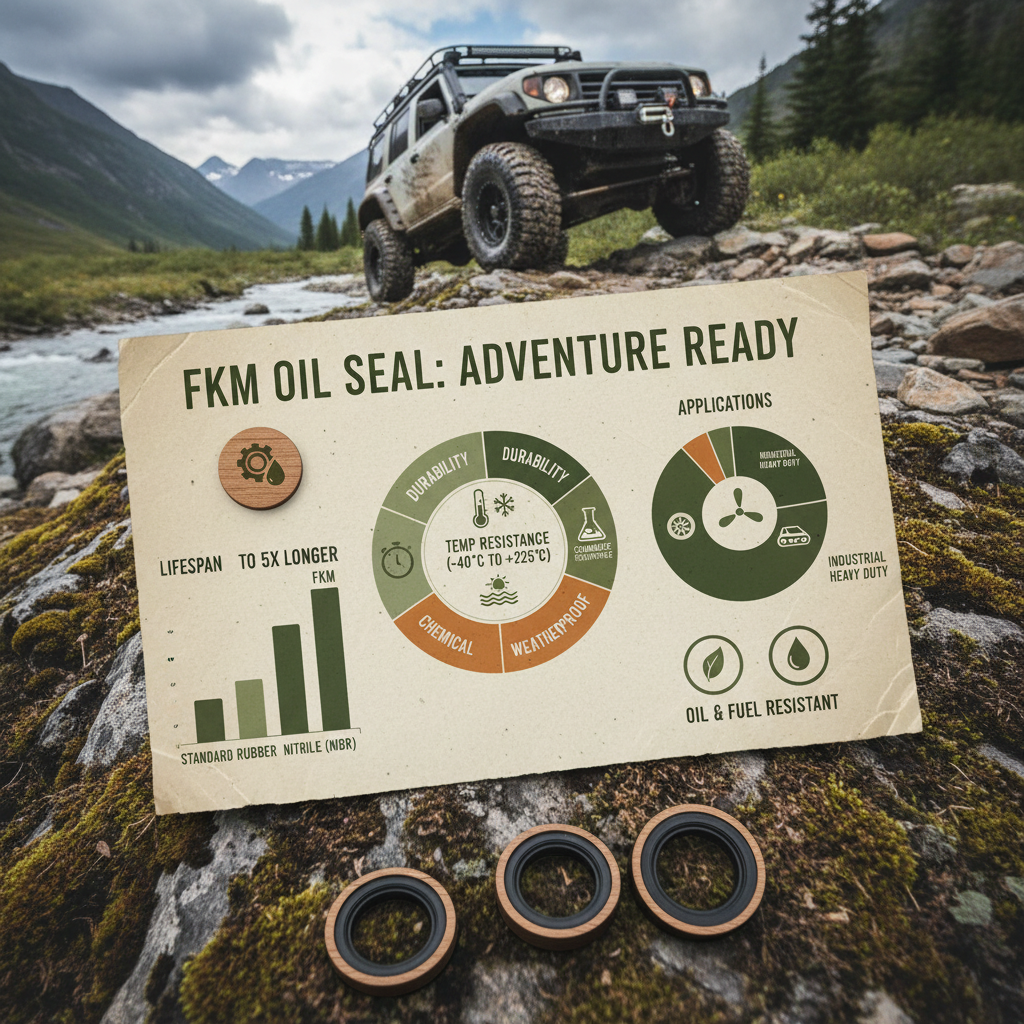
What sets a good fkm oil seal apart? First, and most importantly, its resistance to a wide range of chemicals and oils. It’s gotta stand up to whatever your system throws at it. Second, temperature stability. Construction sites and industrial settings aren’t climate controlled. These seals need to perform reliably in both scorching heat and freezing cold.
Then you’ve got mechanical properties. We’re talking about abrasion resistance, tensile strength, and elongation. A seal needs to be tough enough to withstand constant movement and pressure without tearing or deforming. And finally, compression set. This measures a seal’s ability to return to its original shape after being compressed. A low compression set means a longer-lasting seal.
These properties aren't just lab specs. They translate directly to longer equipment life, reduced maintenance costs, and increased operational uptime. A seal that can handle the heat and the chemicals is a seal that won’t let you down when you need it most.
Global Applications of fkm oil seal Across Industries
I’ve seen fkm oil seals in action everywhere from massive mining operations in Australia to offshore oil rigs in the Gulf of Mexico. In construction, they're critical in hydraulic excavators, bulldozers, cranes, and concrete pumps. These machines rely on precise hydraulic control, and a leaky seal can throw everything off.
In the automotive industry, you’ll find them in fuel systems, transmission seals, and engine components. Aerospace utilizes them in fuel tanks, hydraulic actuators, and landing gear. Manufacturing plants use them in pumps, compressors, and rotary seals. The list goes on and on.
Even in specialized applications like chemical processing plants, where extreme chemical resistance is paramount, FKM seals are the go-to choice. They’re essential for ensuring safe and reliable operation in hazardous environments.
fkm oil seal Performance Across Applications
Advantages and Long-Term Value of Using fkm oil seal
Look, the initial cost of an fkm oil seal might be higher than a standard rubber seal. But that's where people get it wrong. You’re not just buying a seal; you’re buying peace of mind and avoiding a whole lot of future headaches. The extended lifespan translates to fewer replacements, reduced maintenance downtime, and lower overall operating costs.
From a sustainability standpoint, less frequent replacements mean less waste. And in critical applications, a reliable seal can prevent environmental damage from leaks. It’s about doing things right, even if it costs a little more upfront.
Future Trends and Innovations in fkm oil seal Technology
We’re seeing some exciting developments in FKM technology. Manufacturers are constantly working on new formulations to improve chemical resistance, temperature stability, and wear resistance. There's also a push towards more sustainable materials and manufacturing processes.
Smart seals, incorporating sensors to monitor performance and predict potential failures, are also on the horizon. This proactive approach to maintenance could revolutionize equipment management, preventing costly downtime and maximizing efficiency.
Common Challenges and Solutions Regarding fkm oil seal Implementation
One of the biggest challenges is proper installation. An improperly installed fkm oil seal is a failed seal, no matter how high the quality. Training technicians and providing clear installation guidelines are crucial.
Another challenge is selecting the right seal for the specific application. There are different grades of FKM, each with its own properties. Working with a reputable supplier who can provide expert advice is essential.
Finally, compatibility with the surrounding materials needs to be considered. Some fluids can react with certain seal materials, causing swelling or degradation. Thorough testing and material selection are key to ensuring long-term reliability.
Summarizing Common Challenges and Effective Solutions for fkm oil seal Implementation
| Challenge |
Impact on Operations |
Recommended Solution |
Implementation Cost (1-10) |
| Incorrect Installation |
Premature Seal Failure |
Comprehensive Technician Training |
5 |
| Incompatible Fluids |
Seal Swelling and Degradation |
Thorough Fluid Compatibility Testing |
7 |
| Incorrect Seal Grade Selection |
Reduced Performance and Lifespan |
Consult with Seal Experts |
4 |
| Poor Surface Finish |
Increased Friction and Wear |
Proper Surface Preparation |
3 |
| Lack of Preventative Maintenance |
Unexpected Seal Failures |
Implement Regular Inspection Schedules |
2 |
| High Operating Temperatures |
Accelerated Seal Degradation |
Utilize Heat Resistant FKM Grades |
6 |
FAQS
FKM offers significantly superior resistance to chemicals, oils, and high temperatures compared to common rubber materials like nitrile or silicone. This makes it ideal for demanding applications where other seals would quickly degrade. While more expensive upfront, FKM’s longevity and reliability often make it the most cost-effective choice in the long run. It's not about just stopping a leak; it's about stopping leaks reliably under harsh conditions.
The lifespan of an fkm oil seal depends heavily on the application and operating conditions. However, generally, you can expect several years of reliable service, often exceeding the lifespan of nitrile or silicone seals. Factors like temperature, pressure, chemical exposure, and proper installation all play a role. Regular inspection and preventative maintenance will help maximize its lifespan.
While FKM offers excellent chemical resistance, it’s not universally compatible with all fluids. Some highly polar solvents and certain glycol-based fluids can cause swelling or degradation. It's crucial to check the chemical compatibility charts provided by the seal manufacturer before selecting a seal for a specific application. Don’t assume; verify!
Proper installation is key! Ensure the sealing surfaces are clean and free of debris. Use the correct tools to avoid damaging the seal during installation. A light coating of compatible lubricant can help with installation and improve sealing performance. Always follow the manufacturer's instructions and consider using a seal installation tool for optimal results. A poorly installed seal is a wasted investment.
Compared to frequent replacements of less durable seals, FKM's longer lifespan contributes to reduced waste. Manufacturers are also increasingly focusing on sustainable production practices and developing more environmentally friendly FKM formulations. While not entirely “green”, choosing a durable seal like FKM is a step towards minimizing environmental impact.
Finding a reputable supplier is vital. Look for companies with a proven track record, technical expertise, and a wide range of seal options. Don't hesitate to ask for certifications and material data sheets. A good supplier will be able to provide guidance on selecting the right seal for your specific application and offer excellent customer support. YJM Seal is a solid place to start!
Conclusion
Let's be clear: a seemingly small component like an fkm oil seal can have a massive impact on your projects. We’ve talked about its chemical resistance, temperature stability, and long-term reliability. It's more than just a rubber ring; it's a critical element in ensuring the smooth, safe, and efficient operation of your equipment. Choosing the right seal upfront saves you time, money, and headaches down the road.
Don't cut corners on quality. Invest in FKM seals, prioritize proper installation, and implement a preventative maintenance program. It’s about building a resilient system that can withstand the demands of the real world. If you’re looking for high-quality fkm oil seal solutions and expert advice, visit our website today: www.yjmseal.com






 English
  Afrikaans
  Albanian
  Amharic
  Arabic
  Armenian
  Azerbaijani
  Basque
  Belarusian
  Bengali
  Bosnian
  Bulgarian
  Catalan
  Cebuano
  Corsican
  Croatian
  Czech
Czech  Danish
  Dutch
Dutch  Esperanto
  Estonian
  Finnish
  French
  Frisian
  Galician
  Georgian
  German
  Greek
Greek  Gujarati
  Haitian Creole
  Hausa
Hausa  Hawaiian
  Hebrew
  Hindi
Hindi  Miao
Miao  Hungarian
  Icelandic
  Igbo
Igbo  Indonesian
  Irish
Irish  Italian
  Japanese
  Javanese
  Kannada
  Kazakh
  Khmer
Khmer  Rwandese
  Korean
  Kurdish
  Kyrgyz
  Lao
Lao  Latin
Latin  Latvian
  Lithuanian
  Luxembourgish
  Macedonian
  Malgashi
  Malay
Malay  Malayalam
  Maltese
  Maori
Maori  Marathi
  Mongolian
  Myanmar
  Nepali
  Norwegian
  Norwegian
  Occitan
  Pashto
  Persian
  Polish
  Portuguese
  Punjabi
  Romanian
  Russian
  Samoan
  Scottish Gaelic
  Serbian
  Sesotho
  Shona
Shona  Sindhi
  Sinhala
  Slovak
  Slovenian
  Somali
  Spanish
  Sundanese
  Swahili
  Swedish
  Tagalog
  Tajik
Tajik  Tamil
Tamil  Tatar
Tatar  Telugu
  Thai
Thai  Turkish
  Turkmen
  Ukrainian
  Urdu
Urdu  Uighur
  Uzbek
Uzbek  Vietnamese
  Welsh
Welsh  Bantu
Bantu  Yiddish
  Yoruba
  Zulu
Zulu