Procuring automotive sealing components often leads to a common dilemma: balancing upfront costs with long-term mechanical reliability. When evaluating an oil seal price, the figure on the invoice is rarely the most accurate reflection of the component's total cost of ownership.
In the high-precision environment of automotive engines and transmissions, a seal is not merely a rubber ring but a critical barrier against fluid loss and contaminant ingress. The variance in pricing across the market typically stems from differences in elastomer compounding, mold precision, and the quality of the metal casing, which directly impact the seal's lifespan under thermal stress.
Understanding the technical drivers behind these price fluctuations allows fleet managers and repair specialists to make informed procurement decisions. This analysis explores the intersection of material science, manufacturing standards, and market dynamics to clarify how to evaluate value in the rubber sealing industry.

Material Composition and Cost Correlation

The primary driver of any oil seal price is the chemistry of the elastomer. Standard Nitrile Rubber (NBR) is cost-effective for general applications, but environments involving high temperatures or aggressive synthetic lubricants require Viton (FKM) or Silicone. These advanced polymers significantly increase raw material costs but prevent premature hardening and cracking.
Beyond the rubber, the reinforcement materials—such as the carbon steel or stainless steel casing—add another layer of cost. A seal with a high-grade anti-corrosive coating will naturally command a premium over a standard painted shell, as it prevents oxidation in humid or saline environments.
Technical Parameters Affecting Seal Performance
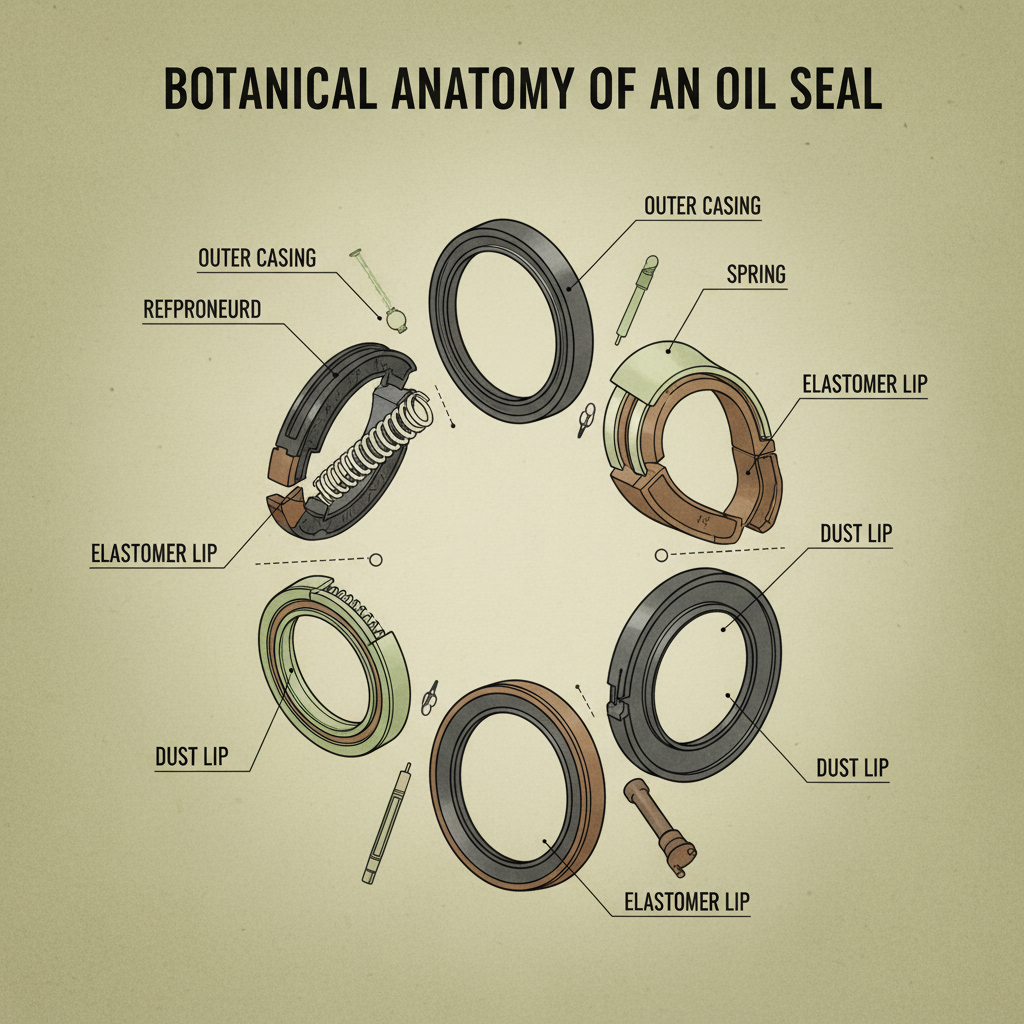
Seal performance is measured by the ability to maintain a leak-proof interface under varying pressures and rotational speeds. The lip design—whether it is a single lip, double lip, or includes a dust protector—determines the seal's effectiveness in excluding external debris. Complex geometries require more sophisticated molding processes, which influences the final market price.
Frictional heat is a critical technical hurdle. High-performance seals utilize specialized lubricants during the manufacturing phase or incorporate low-friction materials like PTFE to reduce wear on the rotating shaft. This technical optimization prevents "grooving" of the shaft, which is a common cause of seal failure in automotive transmissions.
Tight tolerances in the inner diameter (ID) and outer diameter (OD) are non-negotiable for high-speed applications. Even a micron-level deviation can lead to oil seepage or excessive friction, highlighting why precision-engineered components from established manufacturers are preferred over generic alternatives.
The Impact of Manufacturing Precision
Manufacturing consistency is the hidden variable in the sealing industry. While two seals may look identical, the difference often lies in the curing process. Improper vulcanization can leave the rubber too soft (leading to rapid wear) or too brittle (leading to leakage).
The true value of a seal is found in its consistency across production lots; high-precision automation in trimming and spring-loading ensures that every unit meets the same strict operational threshold.
Companies like JULU YJM HWMF SEAL CO., LTD integrate research and production within large-scale facilities to control these variables. By utilizing advanced testing instruments and following ISO 9001 quality management systems, the risk of manufacturing defects is minimized, reducing the likelihood of costly vehicle downtime.
Market Value Index for Sealing Components
When analyzing the oil seal price across different categories, we see a clear correlation between the severity of the operating environment and the price index. General-purpose seals focus on cost-efficiency, whereas heavy-duty and marine seals prioritize extreme durability.
The following index represents a conceptual comparison of value drivers across various seal types, where the value index accounts for material grade, design complexity, and expected service life.
Figure 2. Relative Value Index by Seal Category
Application Scenarios for High-Spec Seals
In luxury and performance vehicles, such as the BMW 3, 4, and 5 series (including variants like the F30, F32, and F10), the tolerances for oil leakage are extremely narrow. These vehicles often employ high-performance synthetic oils that can degrade inferior rubber. Consequently, the selection of an Automotive Oil Seal must be based on chemical compatibility to avoid seal swelling or shrinkage.
Similarly, in marine bearings or heavy-duty industrial machinery, seals must withstand salt spray, abrasive particulates, and immense pressure. In these scenarios, a "budget" seal often fails within months, leading to shaft damage that costs ten times the original seal price to repair.
Evolution of Automated Sealing Production
The shift toward fully automated production lines is fundamentally changing the economics of rubber sealing. Automation in trimming and spring-loading removes the variance introduced by manual labor, ensuring that the lip geometry is identical across millions of units.
Investment in automated inventory and precision molding allows manufacturers to scale production while simultaneously bringing down the unit cost. This enables the delivery of high-spec components, such as Oil Pan Gaskets and Oil Coller Filter Gaskets, at prices that were previously only available for low-grade parts.
Modern facilities now utilize data-driven quality control, where each batch is tested against strict tensile and hardness parameters. This systemic approach to quality ensures that the end-user receives a product that matches the original equipment manufacturer (OEM) specifications exactly.
Procurement Framework for Industrial Seals
Establishing a procurement framework requires looking beyond the initial oil seal price. Buyers should evaluate the total cost of failure, which includes labor for replacement, lost production time, and potential damage to surrounding components.
A balanced approach involves categorizing seals by criticality. Low-criticality seals can be sourced based on price, but high-criticality seals—those in core engine or transmission areas—must be sourced based on material certification and manufacturer history.
The following table provides a comparative selection framework based on typical operational requirements and relative suitability.
| Operating Condition | Recommended Material | Key Consideration | Relative Suitability |
|---|---|---|---|
| Standard Engine Temp | NBR (Nitrile) | General Fluid Leakage | High (Cost Effective) |
| Extreme Heat / Synthetic Oil | FKM (Viton) | Thermal Stability | High (Long Term) |
| Abrasive Dust/Dirt | Double Lip Rubber | External Contamination | Essential |
| High Pressure Marine | Reinforced Cassette | Structural Rigidity | Optimal |
| Low Temp / Cryogenic | Silicone / Special LBR | Elasticity at Cold | Specialized |
| Precision Automotive | PTFE-Coated Lip | Friction Reduction | Recommended |
Questions & Answers
The variance is primarily driven by material grade (e.g., NBR vs. FKM), manufacturing precision (tolerance levels), and quality control standards. Premium brands invest in automated trimming and curing processes to ensure consistent lip geometry, whereas budget options may have higher variability in rubber hardness and dimensions, leading to shorter service lives.
For BMW models like the 3, 4, or 5 series, it is critical to match the seal to the specific engine code and the type of oil used. Ensure the seal is compatible with synthetic lubricants to prevent swelling. Checking the OEM part number or using a verified automotive repair kit is the most reliable way to ensure a proper fit and long-term seal integrity.
Yes. A low-cost seal that fails prematurely can lead to oil starvation in critical engine components, potentially causing catastrophic engine failure. Additionally, the cost of labor to replace a seal often far exceeds the price of the part itself, meaning a more durable, slightly more expensive seal provides better total value.
A bonded seal consists of a rubber ring vulcanized to a metal washer, typically used for static sealing in bolted joints. A cassette seal is a more complex, self-contained unit that includes its own housing, designed for dynamic sealing in heavy-duty environments where the shaft may have slight misalignments.
Automation eliminates human error in the most critical stages: trimming the rubber flash, inserting the garter spring, and final dimension inspection. This results in a product with extremely tight tolerances, which is essential for preventing leaks in high-RPM automotive applications.
The most obvious sign is visible oil seepage or droplets around the shaft exit or the oil pan. A drop in oil levels without an obvious leak elsewhere, or the presence of oil on drive belts and pulleys, also indicates that a seal has been compromised and requires immediate replacement to avoid further damage.
Final Thoughts
Evaluating an oil seal price requires a shift in perspective from "cost per unit" to "cost per hour of operation." By prioritizing material compatibility and manufacturing precision over the lowest bid, operators can significantly reduce maintenance overhead and extend the lifespan of their machinery.
As the industry moves toward higher automation and more advanced polymers, the gap between premium and budget seals is narrowing in terms of initial price, but widening in terms of actual performance. Investing in precision-engineered sealing solutions remains the most effective strategy for ensuring mechanical reliability.




 English
 Afrikaans
 Albanian
 Amharic
 Arabic
 Armenian
 Azerbaijani
 Basque
 Belarusian
 Bengali
 Bosnian
 Bulgarian
 Catalan
 Cebuano
 Corsican
 Croatian
 Czech
 Danish
 Dutch
 Esperanto
 Estonian
 Finnish
 French
 Frisian
 Galician
 Georgian
 German
 Greek
 Gujarati
 Haitian Creole
 Hausa
 Hawaiian
 Hebrew
 Hindi
 Miao
 Hungarian
 Icelandic
 Igbo
 Indonesian
 Irish
 Italian
 Japanese
 Javanese
 Kannada
 Kazakh
 Khmer
 Rwandese
 Korean
 Kurdish
 Kyrgyz
 Lao
 Latin
 Latvian
 Lithuanian
 Luxembourgish
 Macedonian
 Malgashi
 Malay
 Malayalam
 Maltese
 Maori
 Marathi
 Mongolian
 Myanmar
 Nepali
 Norwegian
 Norwegian
 Occitan
 Pashto
 Persian
 Polish
 Portuguese
 Punjabi
 Romanian
 Russian
 Samoan
 Scottish Gaelic
 Serbian
 Sesotho
 Shona
 Sindhi
 Sinhala
 Slovak
 Slovenian
 Somali
 Spanish
 Sundanese
 Swahili
 Swedish
 Tagalog
 Tajik
 Tamil
 Tatar
 Telugu
 Thai
 Turkish
 Turkmen
 Ukrainian
 Urdu
 Uighur
 Uzbek
 Vietnamese
 Welsh
 Bantu
 Yiddish
 Yoruba
 Zulu