Audi A6L C6 Engine Seal Guide and unicorn oil seal price
Securing the internal integrity of an engine requires sealing components that mirror original equipment manufacturer (OEM) specifications exactly. For the Audi A6L C6 2.4 (Engine BDW), the downstream oil seal is a critical barrier against lubricant leakage and contaminant ingress. When evaluating the unicorn oil seal price and overall value, procurement managers must look beyond the initial cost and focus on material reliability, fitment precision, and the manufacturing heritage of the supplier.
High-performance rubber seals are not merely consumables; they are engineered components that maintain engine pressure and longevity. A direct replacement seal must offer stable characteristics and high reliability to prevent costly downtime. By integrating advanced rubber compounding with automated production, manufacturers can now provide components that match original factory specifications while optimizing the total cost of ownership for automotive distributors and repair centers worldwide.

Technical Specifications and OEM Compatibility for Audi A6L C6 Seals
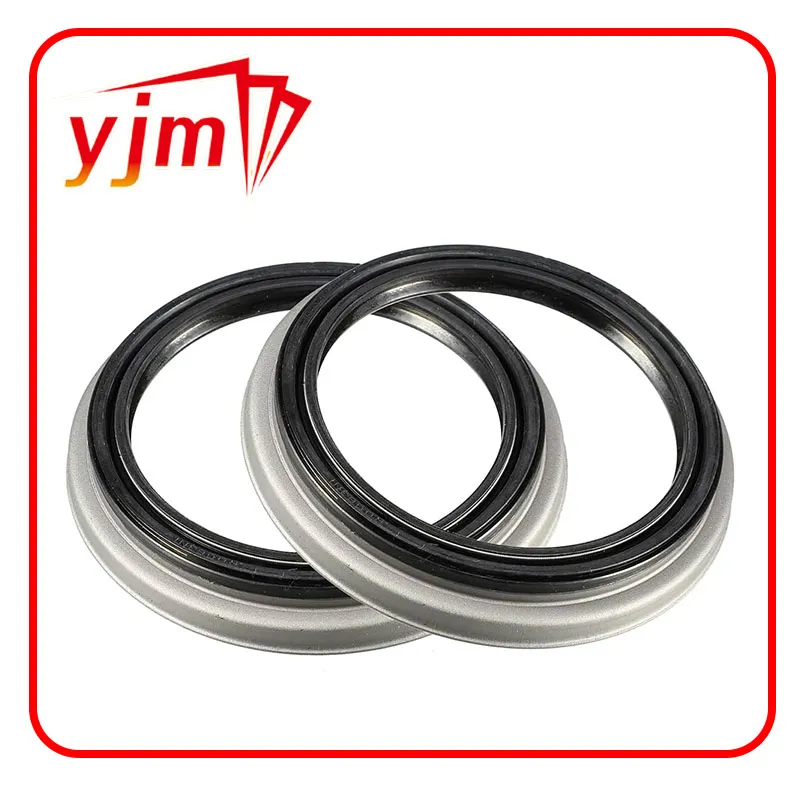
The oil seal designed for the Audi A6L C6 2.4 Engine BDW (Down) is engineered for a perfect match with the original factory specifications. In the rubber and plastics industry, "direct replacement" signifies that the component maintains the exact dimensions, shore hardness, and chemical resistance required by the vehicle's original engineering blueprints. This ensures that the installation process is seamless, reducing labor time and eliminating the risks associated with improper seating.
Key technical attributes include:
- Stable Characteristics: The rubber compound is formulated to withstand extreme thermal cycling within the engine bay without losing elasticity.
- High Reliability: Tested against rigorous leakage standards to ensure long-term operational stability.
- Precision Fitment: Specifically tailored for the BDW engine series, ensuring a tight seal against the crankshaft or valve assembly.
By focusing on these specifications, the product prevents oil migration into sensitive areas of the engine, thereby protecting the catalytic converter and maintaining optimal oil pressure for the lubricated components.

Advanced Manufacturing Processes in Rubber Sealing Technology
Quality in rubber sealing is a direct result of the synergy between material science and automation. The production of high-grade oil seals involves professional rubber compounding, where the polymer base is mixed with specific curing agents to achieve desired durability and heat resistance. This process is supported by sophisticated mold design capabilities, ensuring that every seal produced has a consistent cross-section and surface finish.
To reduce human error and lower manufacturing costs, the implementation of fully automated product lines is essential. This includes the use of automated trimming machines and spring loading machines, which ensure that the metallic reinforcement (the spring) is perfectly positioned within the rubber lip. Such automation not only increases throughput but also guarantees that every unit meets the ISO 9001 international quality management system certification standards.
Furthermore, the capability to produce oversized seats and utilize automated inventory systems allows for a scalable supply chain, meeting the demands of large-scale automotive distributors while maintaining the precision of a boutique engineering firm.
Procurement Strategies for Automotive Sealing Components
When sourcing seals for high-end European vehicles, buyers often face a trade-off between cost and reliability. A strategic procurement approach involves evaluating the manufacturer's technical support network. Partnerships with academic institutions, such as Tianjin University and Beijing University of Chemical Technology, provide a theoretical foundation for material innovation, while collaborations with aerospace and weapons industry entities ensure that the seals can perform under extreme stress.
Buyers should consider the following evaluation criteria:
- Material Certification: Ensure the rubber compound is compatible with the synthetic oils used in modern Audi engines.
- Manufacturing Scale: A larger facility (e.g., 80,000+ square meters) typically indicates a more stable supply chain and better quality control infrastructure.
- Export Experience: Suppliers with extensive experience in Southeast Asia, Europe, and South America are more likely to understand international logistics and quality expectations.
Ultimately, the goal is to find a supplier that integrates R&D with mass production, providing a product that matches the original factory's performance without the OEM price premium.
Oil Seal Performance and Selection Matrix
| Evaluation Factor | OEM Standard | YJM Replacement | Generic Aftermarket |
|---|---|---|---|
| Dimensional Accuracy | Absolute | Perfect Match | Variable |
| Material Stability | High | High Reliability | Medium/Low |
| Installation Ease | Direct Fit | Easy Installation | May Require Adjustment |
| Production Method | Automated | Fully Automated | Semi-Manual |
| Certification | Manufacturer Internal | ISO 9001 | Often Uncertified |
The Role of Technical Collaboration in Seal Longevity
The longevity of an oil seal is determined by its ability to maintain a seal under varying pressures and temperatures. This is where technical force becomes a competitive advantage. By cooperating with Aerospace 42 and the Ministry of Weapons Industry 53, manufacturers can apply high-stress testing and experimental data to commercial automotive seals. This cross-industry knowledge transfer ensures that a seal used in a passenger car benefits from the rigors of aerospace engineering.
For the Audi A6L C6, this means the seal can better handle the specific harmonics and thermal loads of the BDW engine. The result is a component that does not harden prematurely or develop leaks due to material fatigue. When a company invests in technical support from leading chemical and transport universities, the resulting product is an engineered solution rather than a simple rubber part.
Future Trends in Automated Rubber Seal Production
The rubber sealing industry is moving toward total digitalization. The integration of fully automated inventory and trimming processes is the first step toward "Industry 4.0." This transition allows for real-time quality monitoring, where every seal can be traced back to its specific batch of rubber compound. For the end-user, this means a significant reduction in "out-of-box" failures and a more consistent product experience.
Looking ahead, the focus will shift toward smarter materials—compounds that can adapt to different oil viscosities and temperature extremes. As automotive engines become more compact and operate at higher temperatures, the demand for seals with even higher thermal stability will grow. Suppliers who continuously replace and implement better equipment will be the only ones capable of meeting these evolving automotive standards while keeping the unicorn oil seal price competitive for the global market.
Common Inquiries Regarding Automotive Oil Seals
What does "According to original factory specifications" mean for an oil seal?
It means the seal's inner diameter, outer diameter, width, and material hardness are identical to the part originally installed by the vehicle manufacturer, ensuring a perfect fit and identical performance.
Why is ISO 9001 certification important for rubber seals?
ISO 9001 ensures that the manufacturer follows a consistent quality management system, meaning the 1,000th seal produced is identical in quality to the 1st seal.
Can a direct replacement seal perform as well as an OEM part?
Yes, provided the manufacturer uses professional rubber compounding and automated production to match the original specifications and reliability standards.
What causes oil seals to fail prematurely in Audi engines?
Common causes include using low-quality rubber that hardens due to heat, improper installation (lack of a perfect match), or exposure to incompatible chemical additives in low-grade oils.
How does automation affect the cost and quality of the seals?
Automation, such as automated trimming and spring loading, removes human error and reduces waste, which lowers the manufacturing cost while increasing the precision and consistency of the seal.
What should I check before purchasing oil seals in bulk?
Verify the manufacturer's technical support, their certification (ISO 9001), their production capacity (facility size), and their experience in exporting to your specific regional market.
Technical Resources and Industry Standards
- ISO 9001: Quality Management Systems Standards
- SAE International - Automotive Engineering Standards
- Rubber Technology and Compounding Guides
- Audi Group Technical Specifications Overview
For professionals seeking high-reliability sealing solutions that balance technical precision with commercial viability, choosing a manufacturer with deep R&D roots and automated production is the most effective way to ensure engine longevity and customer satisfaction.
Related Sealing Solutions



 English
 Afrikaans
 Albanian
 Amharic
 Arabic
 Armenian
 Azerbaijani
 Basque
 Belarusian
 Bengali
 Bosnian
 Bulgarian
 Catalan
 Cebuano
 Corsican
 Croatian
 Czech
 Danish
 Dutch
 Esperanto
 Estonian
 Finnish
 French
 Frisian
 Galician
 Georgian
 German
 Greek
 Gujarati
 Haitian Creole
 Hausa
 Hawaiian
 Hebrew
 Hindi
 Miao
 Hungarian
 Icelandic
 Igbo
 Indonesian
 Irish
 Italian
 Japanese
 Javanese
 Kannada
 Kazakh
 Khmer
 Rwandese
 Korean
 Kurdish
 Kyrgyz
 Lao
 Latin
 Latvian
 Lithuanian
 Luxembourgish
 Macedonian
 Malgashi
 Malay
 Malayalam
 Maltese
 Maori
 Marathi
 Mongolian
 Myanmar
 Nepali
 Norwegian
 Norwegian
 Occitan
 Pashto
 Persian
 Polish
 Portuguese
 Punjabi
 Romanian
 Russian
 Samoan
 Scottish Gaelic
 Serbian
 Sesotho
 Shona
 Sindhi
 Sinhala
 Slovak
 Slovenian
 Somali
 Spanish
 Sundanese
 Swahili
 Swedish
 Tagalog
 Tajik
 Tamil
 Tatar
 Telugu
 Thai
 Turkish
 Turkmen
 Ukrainian
 Urdu
 Uighur
 Uzbek
 Vietnamese
 Welsh
 Bantu
 Yiddish
 Yoruba
 Zulu